


👋🏾 Hi, hey, hello! Good Tuesday morning. Thank you for waking up with Congress Nerd Sunrise.
📌 New this morning: Graham says he’s open to ballroom hearing … Republicans escalate attacks on Jeffries over redistricting rhetoric … King Charles makes rare Capitol address as U.S.-U.K. alliance tested
☝🏾 But first things first: The Republican-controlled House Rules Committee has yet to reconvene to report a rule allowing floor debate and final passage of three major items—a FISA 702 extension, a GOP farm bill and a Senate-passed budget resolution to fund ICE and CBP through President Donald Trump’s second term—after recessing last night amid conservative opposition to each measure.
House GOP leadership has nonetheless scheduled a vote tonight on a three-year extension of the government’s foreign surveillance authorities, following a floor debacle earlier this month in which a bloc of Republicans rejected short-term extensions and longer-term reauthorizations stalled. Lawmakers remain sharply divided over whether to require warrants for searches of Americans’ data. The current 702 authorities expire on Thursday.
The Senate is set to take its first procedural vote this morning on a clean three-year extension, signaling that Senate Majority Leader John Thune (R-S.D.) is prepared to move ahead rather than let Speaker Mike Johnson’s (R-La.) struggles dictate the timeline on an issue with significant national security and privacy implications. Thune told me last week the Senate would be ready to act if House progress stalled.
A key player in the debate is Senate Intelligence Committee Vice Chair Mark Warner, who is expected back in Washington after missing votes last week following the death of his daughter, Maddy, following a battle with juvenile diabetes and other health issues.
“If I can find any solace during this time, it’s that I have the enormous privilege to serve Virginians and the responsibility to keep working for a better, more just world in Maddy’s name,” Warner said. “I look forward to returning to the Senate this week and continuing that essential work.”
📬 Get in touch: michael@onceuponahill.com
○ ● ●
THE SENATE
Graham says he’s open to ballroom hearing
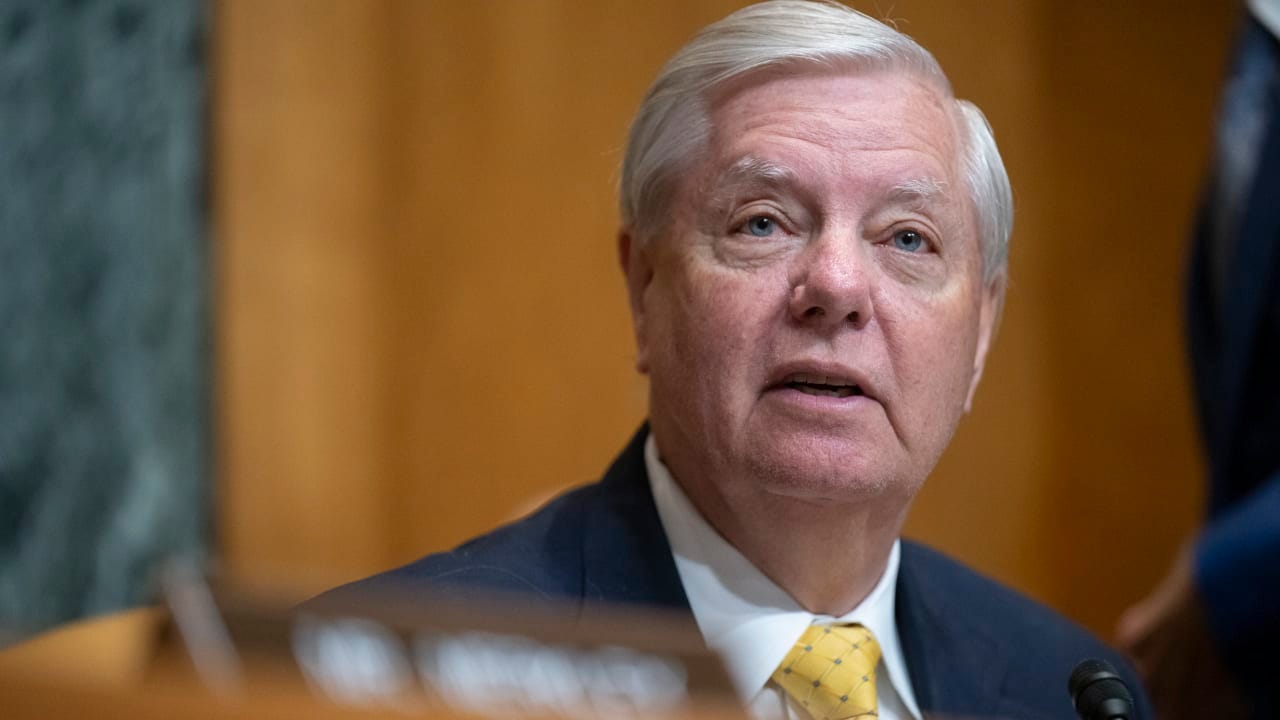
Senate Budget Committee Chair Lindsey Graham (R-S.C.) told me on Monday evening he would welcome a congressional hearing on the Trump administration’s White House ballroom project, signaling openness to scrutiny even as he and Sens. Katie Britt (R-Ala.) and Eric Schmitt (R-Mo.) push legislation to direct $400 million in taxpayer funds toward construction.
The administration has faced criticism for moving ahead with the project, which began last year with the demolition of the East Wing, without explicit congressional authorization, while maintaining that private donations back it. Graham suggested the White House would be willing to make its case on Capitol Hill.
“I think they would love to do that. I welcome a hearing, okay? Have a hearing. Yeah, whatever committee,” he said. “Have a hearing. Should we do my bill? Should we do our bill? You want to do that? I mean, that’s fine with me, yeah.”
Graham said the funding would be offset by new or increased fees tied to imports and border processing—things like duties, user fees, or charges collected by CBP and that his preference is to pass his bill as a stand-alone measure as opposed to attaching it to the immigration-focused reconciliation bill Republicans are currently working on.
In the immediate aftermath of the White House Correspondents’ Dinner shooting on Saturday evening, Republicans began pointing to it to justify the ballroom. But the dinner is a private event at a private venue run by a private organization—not the White House—and it routinely hosts far more guests than the proposed ballroom would hold, with the president attending as an invitee of the White House Correspondents’ Association. That raises questions about why senators like Lindsey Graham are drawing such a direct line between the two.
“Well, I find it appropriate if you’re going to have the president of the United States, the Vice President, the Speaker of the House and half the cabinet in a room, the room matters. And the idea that you can’t do this in the ballroom will be up to the Correspondents’ Association,” Graham said. “It is insane to do this again. Anybody who suggests that we have an event like this in the times in which we live in a facility like Hilton, that’s crazy. We’re going to have to accommodate the times in which we live.”
● ○ ●
REDISTRICTING WARS
Republicans escalate attacks on Jeffries over redistricting rhetoric
House Minority Leader Hakeem Jeffries (D-N.Y.) spent much of his first 18 months as party leader operating below the national noise.
But in recent months—beginning with the opposition to the One Big Beautiful Bill Act last summer, the government shutdown last fall and demands for ICE reforms after federal immigration agents killed two U.S. citizens in Minneapolis earlier this year—the Brooklyn Democrat has taken on a higher-profile role as he ramps up efforts to help Democrats retake the House majority in November.
Republicans have focused in particular on a line Jeffries used while marking a Democratic redistricting win in Virginia—“maximum warfare, everywhere, all the time”—which he deployed to describe an intensified, state-by-state battle over congressional maps.
GOP critics have pointed to the remark as evidence of what they argue is escalatory political rhetoric as the fight over redistricting intensifies ahead of the midterms. After the White House Correspondents’ Dinner shooting, Republicans and conservative commentators elevated that quote as evidence of inflammatory Democratic rhetoric.
Sen. Schmitt argued on Monday evening that Jeffries’s doubling down on his “maximum warfare” comment amounted to empty tough talk aimed at winning back the House, calling it over-the-top and out of step with what the moment demands.
“I think the left has a real assassination-culture problem right now, and we better start talking about it, and we better start resolving it. The Luigi Left here, this is serious business. And I don’t see my Democrat colleagues trying to tone it down.” (Jeffries was the target of a serious death threat from a convicted Jan. 6 offender who received a pardon from Trump.)
But Jeffries didn’t invent the phrase. Instead, he lifted it from a 2025 description of a Trump-aligned redistricting strategy, in which a person close to the president described the GOP approach in identical terms. And while sources close to Jeffries acknowledge his language is blunt, they say it reflects the current state of play more than a departure from it.
Jeffries, for his part, told reporters that violence has no place in politics—regardless of who it targets or where they fall ideologically—and should be unequivocally rejected. But he remained defiant despite multiple opportunities to walk back his use of controversial rhetoric.
“I stand by it,” he said. “You can continue to criticize me for it. I don’t give a damn about your criticism.”

● ● ○
ROYAL VISIT
King Charles makes rare Capitol address as alliance tested
King Charles III will address a joint session of Congress this afternoon to mark the 250th anniversary of American independence and to strengthen the U.S.-U.K. alliance amid heightened diplomatic tensions over the war in Iran.
The address is expected to emphasize shared democratic values and the principles of reconciliation and renewal. He will also highlight the shared history, democratic traditions, and security interests, including NATO, the Middle East, and the AUKUS pact.
Hakeem Jeffries told reporters that Democrats are eager to welcome King Charles to the Capitol and engage in a bipartisan show of support for the U.S.-U.K. alliance, while arguing that recent Republican policies have strained that historically close relationship.
“Hopefully, the king’s visit is going to go a long way toward repairing the damage that this administration has done to one of our most important allies in the world,” Jeffries added.
The rare address—the first by a British monarch since Queen Elizabeth II in 1991—comes at a tense time as President Trump has criticized Prime Minister Keir Starmer’s stance on the war.
Senate leadership, including the Secretary of the Senate and the Deputy Sergeant at Arms, will lead the Senate to the House chamber approximately 35 minutes before the speech is scheduled to begin. House leaders have advised members to be seated around the same time.
Speaker Johnson will greet the king on the Speaker’s Balcony Hallway before walking by Statuary Hall for a photo opportunity. Johnson, His Majesty, and Leaders Thune, Chuck Schumer (D-N.Y.), and Jeffries will participate in a separate photo op at the top of a private meeting.
The speech is a central part of His Majesty’s first U.S. state visit as king. President Trump and First Lady Melania Trump greeted King Charles III and Queen Camilla Parker Bowles at the White House not long after they arrived stateside. The four dignitaries also participated in a tea and beehive tour.
Before the speech on the Hill, President Trump and the First Lady will welcome King Charles III and Queen Camilla at the South Portico, kicking off a series of ceremonial engagements. The leaders will move inside for a private guestbook signing and gift exchange in the Blue Room, followed by a receiving line with official delegations in the Cross Hall.
The president will then sit down with Charles III for a closed-door bilateral meeting in the Oval Office, while the First Lady and Queen Camilla break off for a separate event with students at the White House Tennis Pavilion focused on U.S.-U.K. history and innovation.
The evening program will reset with another formal greeting at the South Portico before the group heads into the residence for a private tour and document viewing. After a second receiving line in the Blue Room, the day concludes with a formal dinner in the East Room.