


Editor’s note: Congress Nerd is on summer break this week ahead of the House’s return from August recess on Monday. But when Reproductive Freedom for All offered us an exclusive on its latest midterm endorsements, we didn’t want to make you wait. Regular Congress Nerd programming resumes Sunday evening.
Reproductive Freedom for All will endorse 17 Democratic House challengers this morning, including 13 running in battleground districts, as the abortion-rights group expands its $23.5 million effort to elect what it calls a reproductive-freedom majority in Congress.
The slate includes candidates across 14 states, from Alaska to Virginia, and is part of Reproductive Freedom for All’s My Body. My Ballot. campaign, its largest-ever midterm electoral program. The initiative is designed to mobilize voters who support abortion rights—including independents, soft Republicans and split-ticket voters—and turn that support into votes for candidates up and down the ballot.
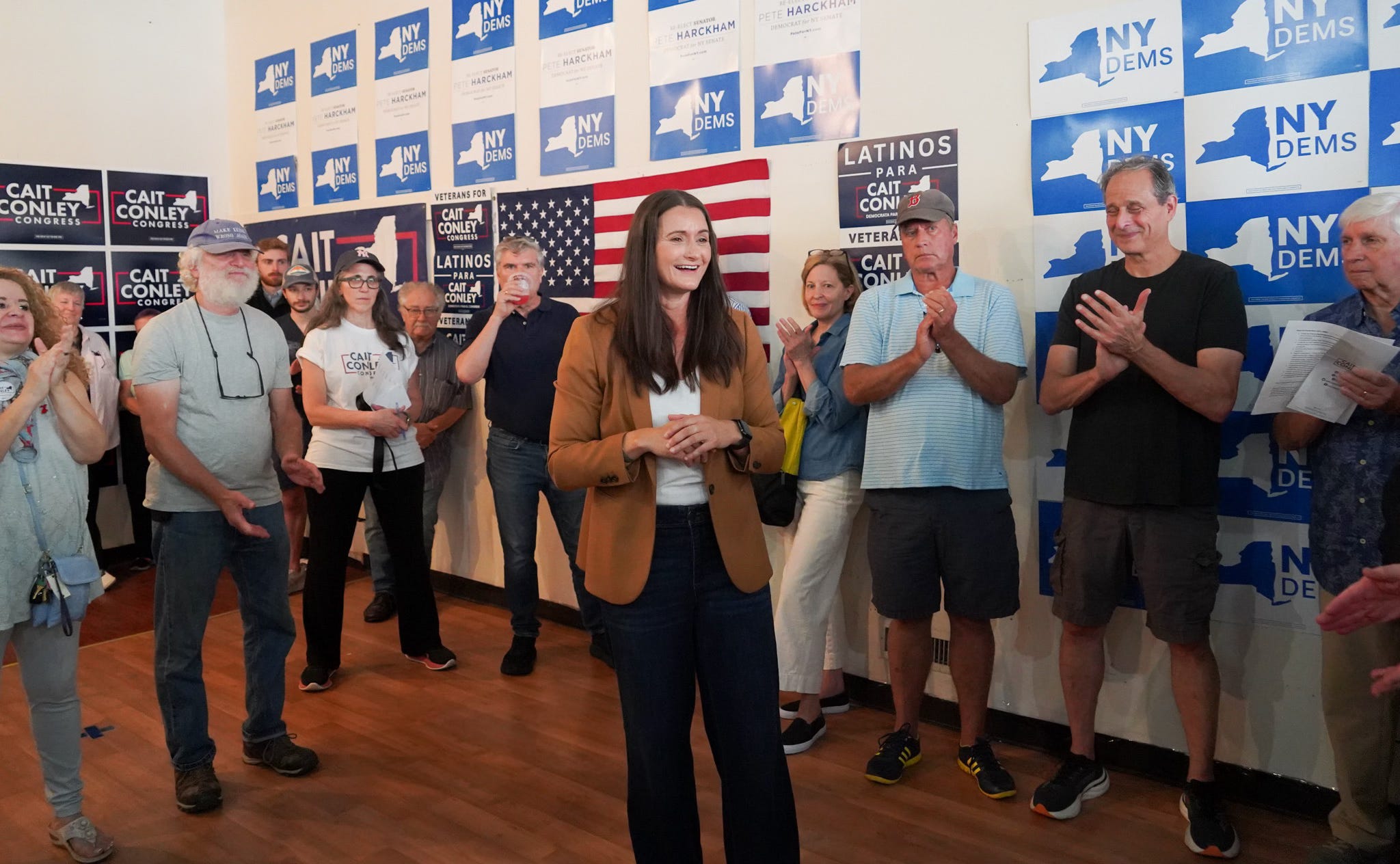
Twelve of the 17 candidates are also members of the Democratic Congressional Campaign Committee’s Red to Blue program for competitive challengers: Randy Villegas in California’s 22nd District; Marni von Wilpert in California’s 48th; Manny Rutinel in Colorado’s 8th; Lindsay James in Iowa’s 2nd; Sam Forstag in Montana’s 1st; Cait Conley in New York’s 17th; Bob Harvie in Pennsylvania’s 1st; Bob Brooks in Pennsylvania’s 7th; Johnny Garcia in Texas’ 35th; and Shannon Taylor, Elaine Luria and Tom Perriello in Virginia’s 1st, 2nd and 5th districts.
The overlap is a reminder of where the fight for the House will actually be decided in less than 10 weeks.
🔓 This edition is in front of the paywall. But if you want Once Upon a Hill in your inbox each evening, upgrade your subscription for full access to every edition and the complete archive. Whether you’re taking the votes, writing the bills, running the campaigns, shaping the message or trying to influence any of the above, Congress Nerd Daily helps you see around corners before everyone else catches up.
Much of the national conversation around Democrats this summer has focused on the party’s ideological direction, including the rise of democratic socialist candidates and whether a broader left-wing insurgency is reshaping Democratic politics. But control of the House is likely to turn on a collection of competitive districts where Democrats are trying to defeat Republican incumbents or flip GOP-held seats—and where outside groups such as Reproductive Freedom for All are directing money, organizing infrastructure and voter outreach.
The DCCC describes Red to Blue as its program for “top-tier” candidates positioned to flip Republican-held districts. Reproductive Freedom for All’s new slate substantially overlaps with that battlefield, underscoring how reproductive freedom groups see abortion not simply as a motivating issue for the Democratic base but as a potential persuasion tool in the races most likely to determine the majority.
“These races span the country, but the choice is the same in every district: leaders who will protect our fundamental freedoms or politicians who will help Trump take more of them away,” Reproductive Freedom for All President and CEO Mini Timmaraju said in a statement announcing the endorsements.
📬 The best stories often start with a conversation. If you’ve got insight, context or something others are missing, my inbox is open. Send me tips, scoops or just say hi: michael@onceuponahill.com.
The endorsements are the latest phase of My Body. My Ballot., which Reproductive Freedom for All launched in June with plans for direct voter contact, coordinated canvassing with campaigns, relational organizing and digital outreach. The organization says its strategy specifically targets voters whose support for abortion access does not always translate into support for Democratic candidates.
That gap is one Reproductive Freedom for All is trying to close this year.
Pavitra Abraham, the organization’s director of state campaigns, told me earlier this month that Reproductive Freedom for All has focused on voters who split their tickets in 2024, including those who backed abortion-rights measures while supporting Republicans elsewhere on the ballot.
Abraham said the group believes some of those voters were presented with a false choice between reproductive freedom and affordability. Its 2026 strategy is to connect abortion access to economic concerns including health-care costs, Medicaid and the financial consequences of deciding whether and when to have children.
“We focused on these split-ticket voters,” Abraham said. “We understand what happened in ’24.” She argued that reproductive freedom and affordability should not be viewed as competing priorities.
“Making a choice about how and when to start a family is the single biggest economic decision you can make in your life,” Abraham said. “Articulating that to voters and helping people see those connections is how we’re going to break through and win.”