


👋🏾 Hi, hey, hello! Good Wednesday morning. Thank you for waking up with Congress Nerd Sunrise.
📌 New this morning: Dems see medication abortion fight reshaping the midterms … Democrats spotlight nursing workforce strains during Nurses Week … Top Dems demand PEPFAR data from Rubio
The nonpartisan Congressional Budget Office estimates that the immigration-related reconciliation bill Senate Republicans released on Monday evening would add $72 billion to the federal deficit over the next decade.
The analysis is unsurprising since it matches the bill text and Republicans have decided against offsetting the funding with the deep cuts they enacted in last year’s One Big Beautiful Bill Act. But it underscores how far today’s GOP has drifted from its pre-MAGA deficit hawk orthodoxy to now embracing large-scale federal spending when it advances core Trump-era priorities such as immigration enforcement, tax cuts and national security.
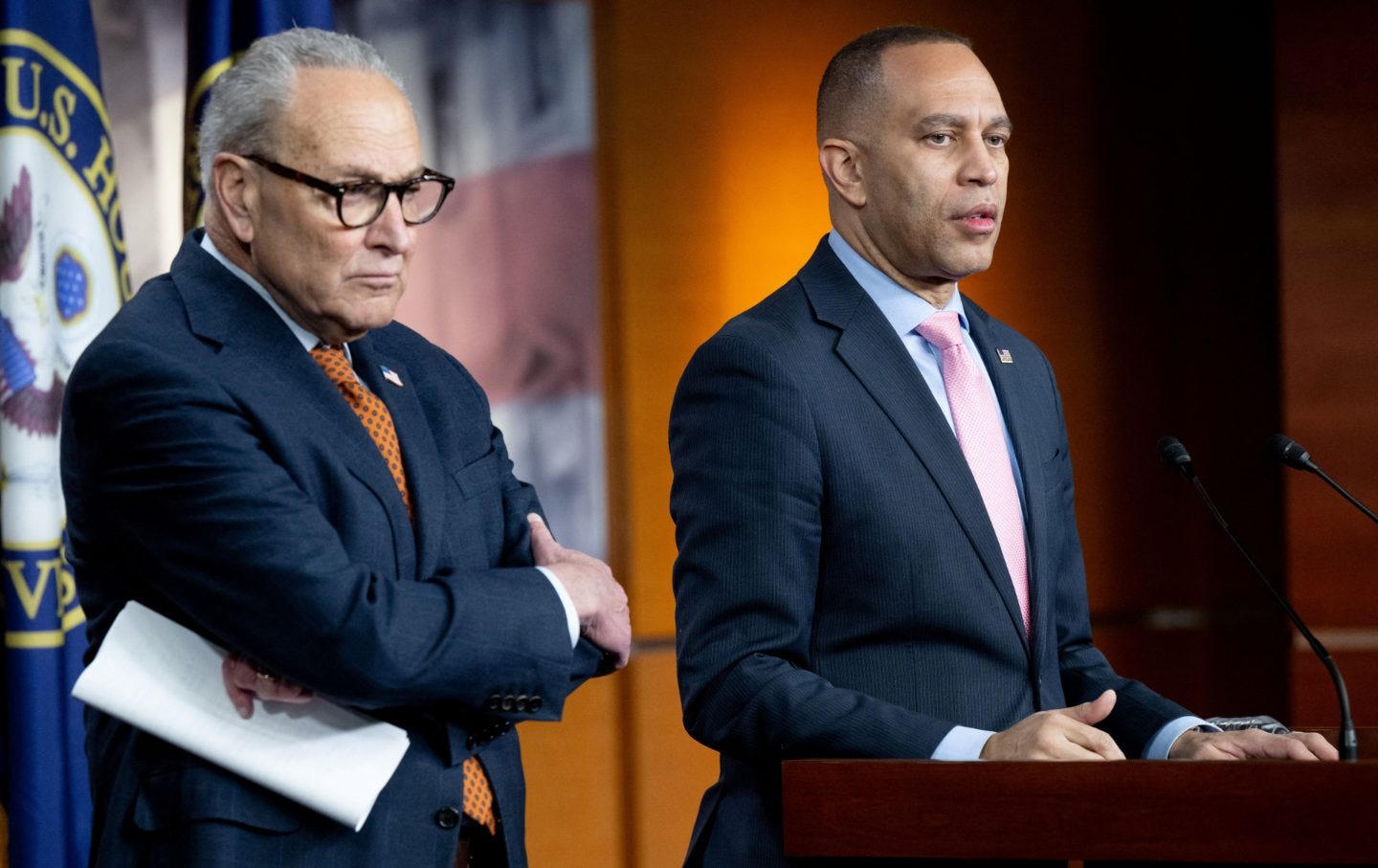
Closing a loop from yesterday’s edition: A spokesperson for House Minority Leader Hakeem Jeffries (D-N.Y.) got in touch after yesterday morning’s Sunrise was published and told me he is broadly supportive of the bipartisan push to ban government officials from betting on prediction markets and is reviewing with House Administration Committee Ranking Member Joe Morelle (D-N.Y.) the measure that unanimously passed the Senate last week to prohibit senators and staff from waging money on the likelihood of future events.
ICYMI: I reported on Monday the White House’s reluctance to say whether President Donald Trump supports extending the Senate’s new ban to the executive branch.
📬 Send me tips, scoops or just say hi: michael@onceuponahill.com
○ ● ●
FIRST THINGS FIRST
Dems see medication abortion fight reshaping the midterms
National Democrats view a recent wave of conservative legal attacks on medication abortion as a sign the issue could once again become a defining fight ahead of the November midterms.
The Supreme Court’s Dobbs decision overturning Roe v. Wade transformed abortion into a galvanizing issue during the 2022 cycle that helped Democrats outperform expectations by energizing women, younger voters and abortion-rights supporters—while blunting an anticipated Republican red wave.
Now, with the high court weighing emergency appeals that could restrict mail-order access to mifepristone, Democrats see an opening to campaign on preserving and expanding abortion access as the issue returns to the center of the national political debate.
“If it doesn’t [become a midterms issue], then we’re not doing our jobs,” a Democratic lawmaker told me Tuesday evening.
The 5th Circuit Court of Appeals ruled last week to effectively reinstate a requirement that patients obtain the drug in person from a medical provider.
The judges sided with Louisiana’s argument that mail-order access conflicts with the state’s abortion restrictions and policies regarding fetal personhood. Although Louisiana brought the case, the ruling applied nationwide and could have affected millions of women in states where abortion remains legal.
The Supreme Court issued an administrative stay three days later, temporarily pausing the ruling and restoring full access to the drug while the justices review the case.
Anti-abortion groups have long challenged the FDA’s 2000 approval of mifepristone, as well as policy changes in 2016 and 2021 that expanded access through telemedicine prescriptions and mail delivery. The latest case follows a 2024 Supreme Court ruling dismissing a similar challenge over lack of standing, with Louisiana’s lawsuit attempting to clear that legal hurdle by bringing the case through the state itself.
Senate Minority Leader Chuck Schumer (D-N.Y.), Hakeem Jeffries and more than 250 congressional Democrats filed an amicus brief earlier this week urging the Court to overturn 5th Circuit’s ruling that members argue could restrict access to mifepristone and disrupt the FDA’s drug approval authority.
● ○ ●
HEALTHCARE
Democrats spotlight nursing workforce strains during Nurses Week
House Democratic leadership is urging members to hold healthcare events in their districts to coincide with National Nurses Week, according to a person familiar with the guidance.
The push comes as Democrats spotlight rising healthcare costs heading into the midterms, while nurses face mounting pressure from heavier workloads, fewer supports and a more precarious labor market.
“This National Nurses Week, we celebrate the valuable contributions of our nursing workforce and call attention to the obstacles and challenges nurses face every day,” Congressional Nursing Caucus Co-Chair Suzanne Bonamici (D-Ore.) said in a statement. “Nurses provide essential, dedicated care across the country, and we must support their work while helping more people enter the field.”
Sen. Jeff Merkley (D-Ore.), who is married to a nurse and co-chairs the Senate Nursing Caucus, said he has seen firsthand how demanding the job can be.
“In every corner of Oregon, nurses offer vital care, support, and advocacy to patients and their families during challenging times,” he said. “Let’s pause this week to express gratitude for and honor the nurses in our communities for their unwavering skill, commitment, and compassion. We must remain dedicated to providing them with the support necessary to continue their life-saving work.”
More broadly, nurses are navigating a mix of workforce strain, policy pullbacks and economic pressure under President Trump’s second-term agenda and congressional Republican priorities.
On the care-delivery side, the administration rescinded the Biden-era federal minimum staffing rules for nursing homes, which would have required 24/7 coverage by registered nurses. Republicans have also moved to delay or roll back similar standards in legislation, steps critics say could deepen chronic understaffing and stretch nurses even further in already high-pressure settings.
At the same time, shifts toward deregulation and gig-style staffing models are putting downward pressure on wages, job stability and labor protections. Budget pressures and proposed healthcare cuts have compounded that strain, with nurses warning of shrinking resources, unsafe patient ratios and burnout conditions that have already fueled labor unrest, including the large 2026 New York City nurses strike.
Merkley and Congressional Nursing Caucus Co-Chair Jen Kiggans (R-Va.) also raised concerns last week after the Education Department finalized a rule excluding post-baccalaureate nursing programs from qualifying as professional degrees.
Critics say the change would lower federal borrowing limits for nursing students, potentially discouraging new entrants, worsening workforce shortages and creating additional barriers to entering the profession, particularly for lower-income students.
National Nurses Week runs from May 6 through May 12.

● ● ○
HEALTHCARE
Top Dems demand PEPFAR data from Rubio
House Foreign Relations Committee Ranking Member Jeanne Shaheen (D-N.H.) and House Foreign Affairs Committee Ranking Member Gregory Meeks (D-N.Y.) earlier this week pressed Secretary of State Marco Rubio to release last year’s missing data for the President’s Emergency Plan for AIDS Relief (PEPFAR), warning that withholding three-quarters of reporting undermines transparency, oversight, and the program’s bipartisan support.
They also pointed to troubling signs in the limited data available—including declines in testing, diagnoses, and treatment starts—and caution that without full transparency, the U.S. risks derailing progress toward ending the HIV/AIDS epidemic by the end of the decade.
“After decades of U.S investment, PEPFAR, was on track to eradicate HIV/AIDS by 2030. That remarkable goal is only within reach because we gained a detailed understanding of the HIV epidemic through the collection, analysis and dissemination of data, which in turn allows programs to reach the right people in the right place at the right time,” Shaheen and Meeks wrote in a letter to Rubio. “Without this understanding, we risk squandering the U.S.’s legacy of leading the worldwide charge to eradicate HIV/AIDS and save lives.”
PEPFAR has become a flashpoint in the broader Trump 2.0 fight over foreign aid, global health, and America’s role abroad. The program, launched under President George W. Bush in 2003 and long viewed as one of the most successful bipartisan foreign-aid initiatives in modern history, is now operating inside a dramatically reshaped “America First” agenda under Rubio.
While the administration says HIV prevention efforts for millions of people has largely been maintained, outside researchers and advocates say the broader HIV infrastructure has weakened sharply under funding freezes, staffing cuts, and reporting disruptions. Recent data showed declines in HIV testing, diagnoses, treatment initiations, and preventative care programs like PrEP.
Even with pressure from Trump allies to slash foreign aid spending, bipartisan coalitions in the Senate preserved billions of dollars in PEPFAR funding last year, underscoring the program’s unusually durable support on Capitol Hill.
The core tension now is whether PEPFAR remains primarily a public-health and humanitarian initiative or evolves into a narrower instrument of strategic statecraft tied to Trump-era priorities about trade, migration, and great-power competition.
Critics warn the transition risks reversing decades of progress against HIV/AIDS, particularly in sub-Saharan Africa, while the administration argues it is modernizing the program and pushing partner nations toward greater self-sufficiency. Shaheen and Meeks would like to maintain Congress’s oversight responsibilities to determine if it has been successful thus far in that mission.