


👋🏾 Hi, hey, hello! Welcome to Congress Nerd Daily, Once Upon a Hill’s reported evening briefing chronicling the strategic decisions, procedural fights and campaign dynamics that determine how power is exercised, challenged and won on Capitol Hill. Happy Pride Month! 🏳️🌈
Before we get to politics, a quick tour through the alternate universe that was today in sports.
Serena Williams officially announced her return to the tennis court after retiring nearly four years ago. The 23-time Grand Slam singles champion will compete as a doubles wild card at the Queen’s Club Championships in London later this month as a tune-up for Wimbledon, which begins in late June.
Meanwhile, NFL single-season sack leader Myles Garrett was traded from the Cleveland Browns to the Los Angeles Rams this afternoon in a blockbuster deal that sends the two franchises in dramatically different directions: an all-in push to win now for the Rams and a full organizational reset for the Browns. My Dallas Cowboys travel to Southern California to face Garrett and his new team on Dec. 20.
And ahead of Wednesday’s tipoff between the New York Knicks and San Antonio Spurs in an NBA Finals rematch 27 years in the making, New York City Mayor Zohran Mamdani signed an “executive order” temporarily repealing bedtimes across the city so kids of all ages can stay up and watch the Knicks. (Each game is scheduled to start at 8:30 p.m. ET, FWIW.)
“As Mayor, you’re forced to make many difficult decisions,” Mamdani wrote on X. “This was not one of them. Go Knicks.”
In this evening’s edition: reporting on why the Justice Department’s decision to abandon its proposed $1.8 billion so-called weaponization fund may still not be enough to quell the bipartisan Senate outrage that derailed Republicans’ immigration reconciliation bill before Memorial Day.
Plus, how Black voters fit into the statewide coalition state Sen. James Talarico is building in hopes of defeating Texas Attorney General Ken Paxton in November and details on a bipartisan, bicameral bill that would require the federal government to notify Americans when their emails or other personal digital records have been accessed.
☝🏾 One more thing: This edition is in front of the paywall. But if you want the Tuesday and Thursday editions, plus the Sunday lookahead, upgrade your subscription for full access to every edition and the complete archive. Whether you’re taking the votes, writing the bills, running the campaigns, shaping the message or trying to influence any of the above, Congress Nerd Daily helps you see around corners before everyone else catches up.
THE CAMPAIGN BULLETIN
Congress takes another shot at email privacy
House Democrats and libertarian-minded Republicans this afternoon revived a long-running bipartisan push to drag federal digital privacy law into the internet age.
Rep. Suzan DelBene (D-Wash.) and Rep. Warren Davidson (R-Ohio) reintroduced the Email Privacy Act, legislation that would require law enforcement to obtain a warrant before accessing Americans’ emails and other private digital communications, regardless of how long they have been stored. The lawmakers’ argument is straightforward: Americans should not lose Fourth Amendment protections simply because their personal records are stored in a Gmail inbox instead of a filing cabinet.
The proposal targets a decades-old quirk in federal law. Under the Electronic Communications Privacy Act, which Congress enacted in 1986, government investigators can access emails older than 180 days without a warrant under certain circumstances because lawmakers assumed users would routinely delete older messages to conserve storage space.
The bill’s backers argue that assumption no longer reflects reality in an era when millions of Americans store years of emails, photos and documents in cloud-based accounts.
The legislation has attracted an unusually broad coalition, drawing support from organizations that rarely find themselves on the same side of a policy debate, including the ACLU, Americans for Prosperity, the Electronic Frontier Foundation, the U.S. Chamber of Commerce, and Demand Progress.
The proposal also arrives as lawmakers prepare for another debate over surveillance authorities and digital privacy. Congress is expected to revisit key intelligence and surveillance powers in the days ahead, setting up a familiar clash between privacy advocates who want stronger protections for Americans and national security officials who warn that additional restrictions could hamper investigations.
📬 The best stories often start with a conversation. If you’ve got insight, context or something others are missing, my inbox is open. Send me tips, scoops or just say hi: michael@onceuponahill.com.
THE TRAIL
Talarico works to broaden his coalition
One thing that caught my attention over the weekend was Atlanta pastor Jamal Bryant’s introduction of Sen. Jon Ossoff (D-Ga.) at a rally alongside gubernatorial nominee Keisha Lance Bottoms.
The moment was a reminder that campaigns aren’t just about television ads and fundraising. They’re also about relationships. In Georgia, Ossoff was showcasing a coalition years in the making.
That got me wondering: What does coalition-building look like for Texas Democrat James Talarico as he pivots to the general election?
Asked about the campaign’s outreach to Black voters, a Talarico spokesperson pointed to a months-long effort that has included appearances at two historically Black colleges and universities, meetings with Black community leaders and clergy across Texas, interviews with Black media outlets and a policy agenda on maternal mortality, which disproportionately affects Black women.
The campaign highlighted Talarico’s commencement address at Paul Quinn College in Dallas, a conversation with student leaders at Prairie View A&M University, church visits in Dallas and Houston and meetings with Black leaders in the Dallas-Fort Worth area, Houston and Austin.
None of this guarantees support at the ballot box. But it does offer a glimpse into how Talarico is approaching one of the central challenges facing any Democrat seeking statewide office in Texas: building a coalition broad enough to compete in November.
It remains to be seen whether those efforts will be enough to build a coalition capable of withstanding the attack ads, partisan polarization and political headwinds that accompany one of the most expensive and closely watched elections of the cycle.

The Big Story
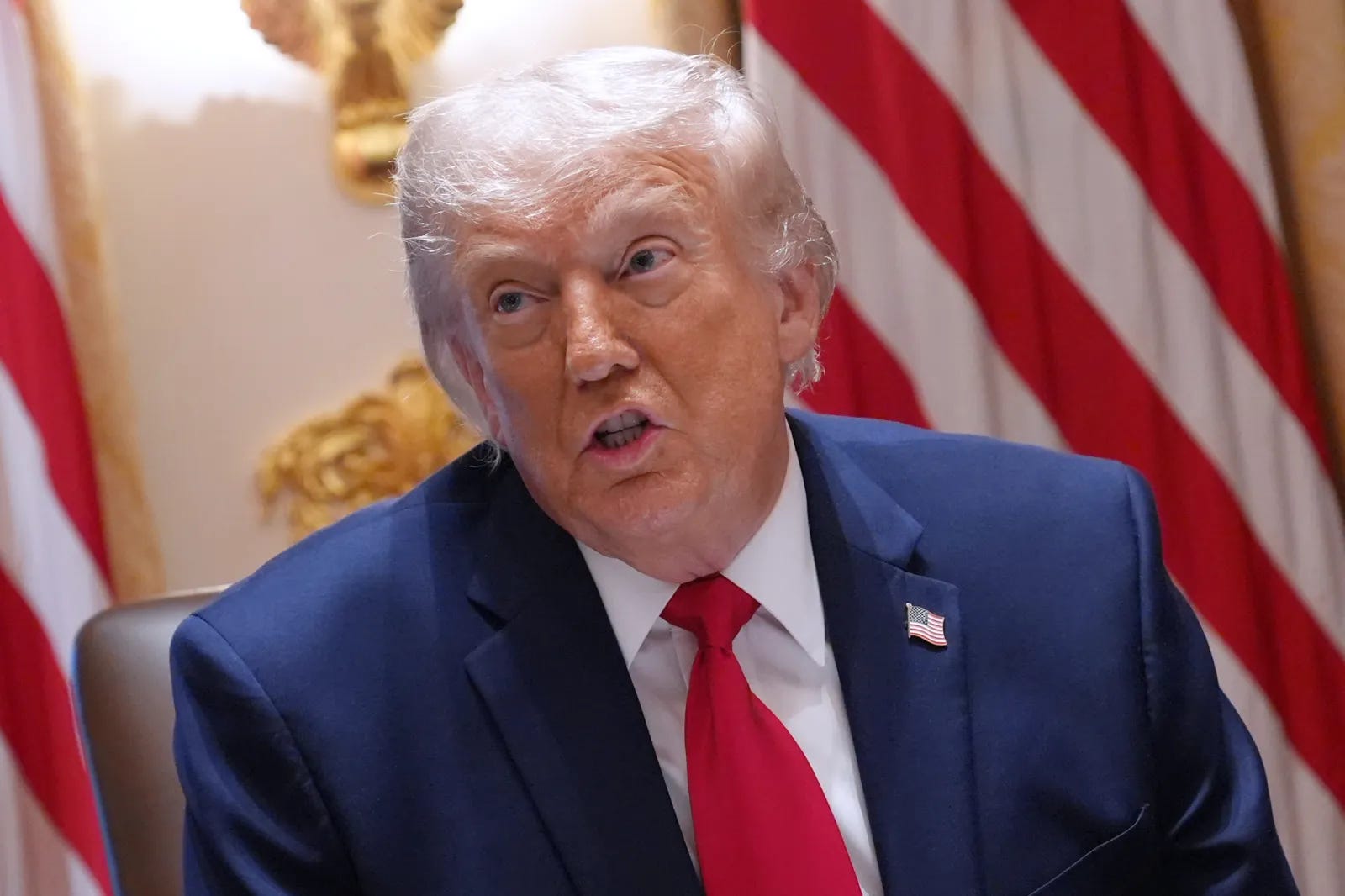
The Justice Department on Monday did what several Republican senators had urged Acting Attorney General Todd Blanche to do before Memorial Day: halt plans for the controversial $1.776 billion “anti-weaponization fund” created as part of a settlement resolving President Donald Trump’s $10 billion lawsuit against the IRS over the leak of his tax records.
The department said on X that while it strongly disagreed with a federal district judge’s decision last week to freeze the program, it would comply with the order and immediately pause all operations.
But the court’s block is temporary, and trust between the administration and congressional Republicans remains low after Trump officials unveiled the fund while Senate Republicans were attempting to advance a party-line immigration reconciliation bill. The controversy was compounded by a separate $1 billion provision for Trump’s White House ballroom project and came as two prominent Republican incumbents, Sens. Bill Cassidy of Louisiana and John Cornyn of Texas, suffered defeats to Trump-backed primary challengers.
Without an explicit commitment from the administration that it will not revive the fund once the court order expires, it remains unclear whether the pause will satisfy Republicans who opposed the proposal before last week’s recess.
The Justice Department’s statement also did little to address another source of GOP frustration: a separate $1 billion provision for Trump’s White House ballroom project, despite the president’s previous insistence that taxpayers would not bear the cost.
“I think the best way to get the reconciliation bill moving and across the finish line is to confine it to the issues that we were addressing in the initial bill, which was CBP and ICE, and funding it for the next three years through the end of the Trump administration,” Senate Majority Leader John Thune (R-S.D.) told me this afternoon.
The Justice Department’s reversal came shortly after Speaker Mike Johnson (R-La.) met with Trump at the White House to discuss the fund, underscoring the political pressure the administration faces from congressional Republicans eager to revive the stalled reconciliation effort.
Democrats, meanwhile, are pressing ahead with plans to permanently kill the program.
Senate Minority Leader Chuck Schumer (D-N.Y.) announced Monday that Democrats will launch a coordinated campaign to shutter the fund. In a Dear Colleague letter, Schumer argued the proposal amounts to a taxpayer-funded slush fund that could benefit Trump, his allies and Jan. 6 defendants. He said Democrats would use reconciliation, appropriations, floor votes and congressional oversight to force Republicans to take public positions on the issue.
Three Democratic senators, Adam Schiff (Calif.), Mark Kelly (Ariz.) and Elissa Slotkin (Mich.), introduced legislation Monday that would effectively shutter the fund.
“This thing’s a disgrace,” Kelly told reporters. “Let’s call this what it is. This is corruption in broad daylight.”
The senators said they had not yet spoken with Republican colleagues about supporting the legislation but planned to do so in the coming days.
“I will say the easiest way for them to insulate themselves from this would be to join us and co-sponsor this legislation to prevent this from ever happening again,” Kelly said.
Asked whether Republicans would support Democratic-led legislation to block this or future compensation funds, Thune said he was uncertain.
“But I do think that the best way to handle it is if the administration decides to shut it down themselves,” he said.
Sen. Jacky Rosen (D-Nev.) said she plans to introduce three bills this week that would redirect the money to SNAP, Medicaid and local law enforcement hiring programs.
The compensation fund would draw on the federal Judgment Fund to compensate individuals who allege they were targeted by political investigations or “lawfare.” No money has been distributed because the five-member commission responsible for approving payouts was never appointed before the court-ordered freeze took effect.
House Minority Leader Hakeem Jeffries (D-N.Y.) quickly seized on reports that the administration could abandon the fund.
“The corrupt Trump $1.8 billion slush fund for violent insurrectionists is on life support,” he wrote on X. “Congress needs to pull the plug.”
House Democrats are expected to make the fund a central messaging focus, though caucus leaders had not finalized a formal strategy as of Monday morning, according to a person familiar with the discussions.
Jeffries said last week on SiriusXM’s The Julie Mason Show that Democrats would use the appropriations process to prohibit the administration from distributing taxpayer dollars to Jan. 6 defendants.
“It was completely and totally outrageous,” Jeffries said when asked about the proposal. “And again, I think just further evidence that Donald Trump is not interested in making life better for the American people. Rather, his primary interest appears to be enriching himself, running the whole Trump administration in a way that is designed to benefit the wealthy, the well-off and the well-connected.”
Thune expressed confidence that House Republicans would ultimately support a narrower Senate-passed reconciliation bill focused solely on funding for ICE and CBP.
“I hate to predict or project what the House may or may not do,” the South Dakota Republican said. “But I think the best way to get it done is to get back to where we were originally, and that was a targeted, clean, focused, narrow bill that addresses specifically those Homeland Security issues through the end of the administration.”
Thune said he last spoke with Trump about the fund last week and continued discussions with administration officials over the weekend.
“I’ve made my views clear on this for several days now,” he said.