


👋🏾 Hi, hey, hello! Thank you for waking up with Congress Nerd Sunrise.
First things first: What a comeback by the New York Knicks last night. Both Conference Finals Game 1s have kept me up past my bedtime on back-to-back nights, but they’ve also been instant classics, so I’ll accept the exhaustion tax that comes with staying up to watch them.
Hoops aside, last night’s primaries offered an early snapshot of the political coalitions, grievances and ideological fights likely to shape the midterms, from President Donald Trump’s continued domination of the GOP to the staying power of progressive energy in deep-blue Democratic districts. A few highlights:
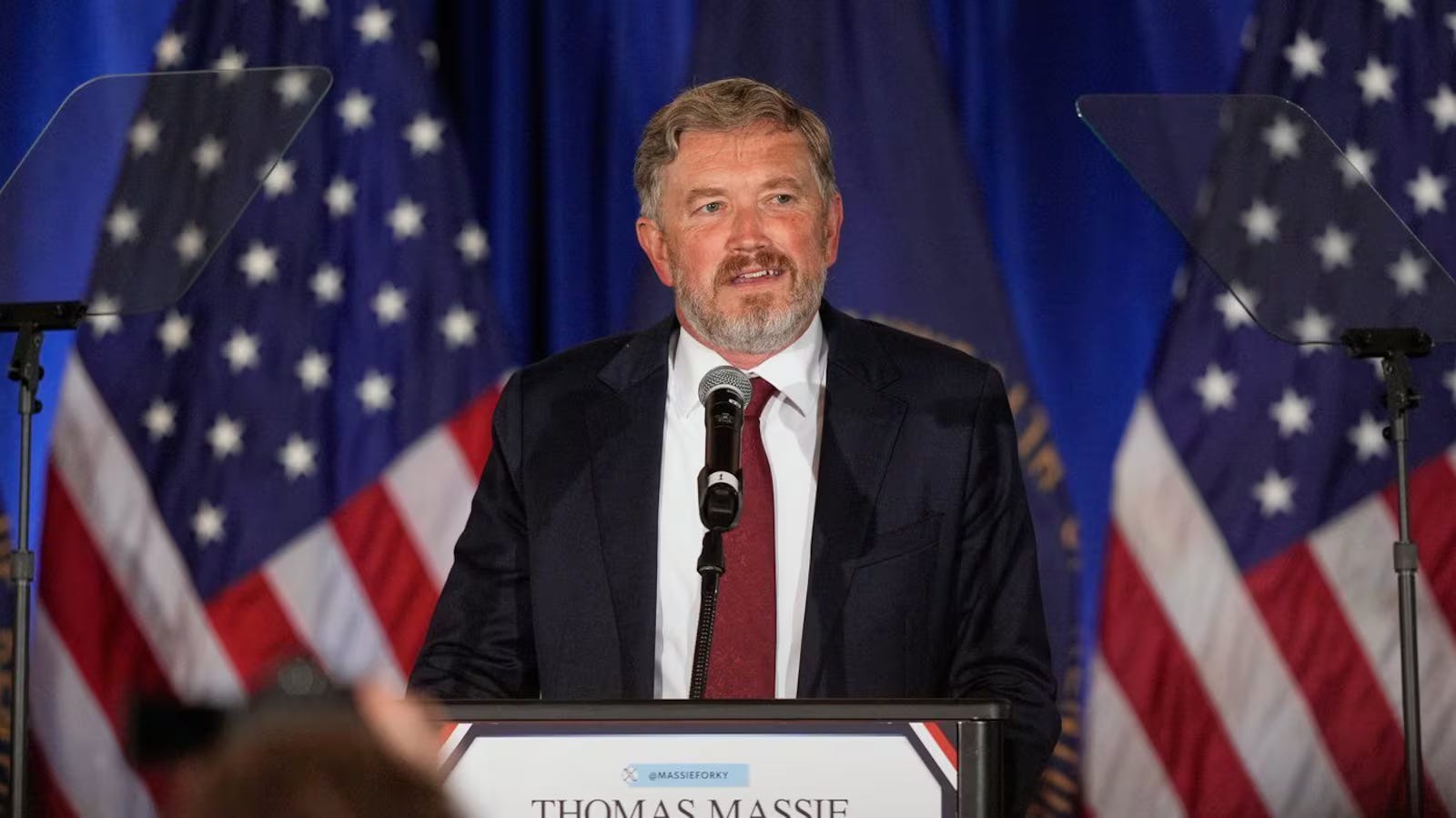
Trump got his political revenge in Kentucky, where MAGA-backed Navy SEAL veteran Ed Gallrein defeated Rep. Thomas Massie in one of the cycle’s nastiest and most expensive GOP primaries after months of attacks over Massie’s opposition to the One Big Beautiful Bill Act, criticism of the Iran war and push to release the Epstein files. But each successful act of payback makes it harder for Republicans to maintain the governing coalition needed to advance Trump’s agenda. That tension may become one of the defining stories of the midterms.
Georgia Republicans are headed for a high-stakes Senate runoff between Rep. Mike Collins and former football coach Derek Dooley, setting up a monthlong electability fight in a battleground race that Democrats believe Sen. Jon Ossoff is well-positioned to win thanks to his massive fundraising edge and unified Democratic support.
Pennsylvania progressives scored one of their biggest victories of the cycle after state Rep. Chris Rabb won the Democratic primary in the deep-blue Philadelphia-based 3rd District, overcoming better-funded establishment-aligned rivals and potentially adding another unapologetic left-wing voice to the House Democratic Caucus.
Georgia state Rep. Jasmine Clark emerged from the crowded Democratic primary in Georgia’s 13th District as the likely successor to the late Rep. David Scott, capping a race that quickly became a generational and geographic battle over the future of one of metro Atlanta’s safest blue seats.
What paid subscribers are reading: In last evening’s Congress Nerd Sunset, I wrote about how Democrats and civil-rights groups escalated their opposition to the SCORE Act after House GOP leaders pulled the bill from the floor again, with the NAACP launching a boycott campaign targeting major athletic programs as Senate negotiators quietly continued talks on a federal college sports framework. Still on the free plan? Upgrade your subscription for full access to this report and all future editions of Sunset.
Byrd baths and ballrooms: Senate Republicans continue their race against the clock to conform their party-line immigration package to the chamber’s strict budget reconciliation rules. Leadership hopes senators can begin the vote-a-rama tonight ahead of final passage tomorrow. But as of publication time, the bill is still undergoing its Byrd Bath, leaving the timeline contingent on when that process wraps up.
The $1 billion provision for security enhancements tied to Trump’s ballroom project remains a political flashpoint for Republicans. Many privately hope the provision gets Byrded out so they do not have to take a public vote on an item they oppose behind closed doors.
The House returns today after leadership canceled votes Monday and Tuesday while adding a Friday voting session so Republicans can immediately take up the Senate bill if and when it arrives from across the Capitol. Member attendance—it is Memorial Day weekend, after all—and the substance of the bill itself will likely determine its fate.
Remember: all this hustle and bustle is in service of the arbitrary June 1 deadline Trump set several weeks ago.
In the meantime, the House will vote on a rule allowing floor consideration of legislation that would loosen federal gun background check requirements for veterans, expand several veterans’ benefits by increasing disability and survivor compensation and allow the Smithsonian American Women’s History Museum to be built on the National Mall while requiring the museum to define women based on sex assigned at birth.
Also on the suspension calendar: the House version of a sprawling bipartisan housing bill and legislation directing the Treasury Department to mint commemorative gold and silver coins marking the 25th anniversary of the September 11 terrorist attacks, with proceeds supporting the National September 11 Memorial & Museum in New York City.
Elsewhere on the Hill today: House Republicans and Democrats will hold their weekly conference and caucus meetings this morning ahead of votes.
The Democratic Women’s Caucus will join survivors and advocates this afternoon for the launch of “Reckoning Action,” a new organization formed by the coalition that pushed for the resignations of former Rep. Eric Swalwell (D-Calif.) and Rep. Tony Gonzales (R-Texas) amid allegations of sexual misconduct and accountability failures in Congress.
Rep. Ayanna Pressley (D-Mass.), Color Of Change, Congressional Black Caucus members and civil-rights advocates will host an event warning about rising Black unemployment and affordability pressures they say have worsened under President Trump’s economic agenda.
Sen. Bernie Sanders (I-Vt.) and Rep. Summer Lee (D-Pa.) will unveil legislation to ban super PAC spending in federal elections, continuing Democrats’ broader post-Citizens United push to curb the growing influence of billionaire, crypto and AIPAC-aligned outside money in politics. I wrote about the bill last year.

ICYMI: Senate Democrats finally broke through on Sen. Tim Kaine’s Iran War Powers Resolution after seven failed tries, advancing the measure in a 50-47 procedural vote that forced another uncomfortable split inside the GOP conference over the still-unresolved conflict and its economic fallout back home. Sen. Bill Cassidy (R-La.), no longer facing voters after his primary loss last weekend, joined Sens. Rand Paul (R-Ky.), Lisa Murkowski (R-Alaska) and Susan Collins (R-Maine) in siding with Democrats, while Sen. John Fetterman (D-Pa.) was the lone Democrat to oppose the effort as the party increasingly ties the prolonged conflict to rising gas prices and broader cost-of-living concerns.
President Trump endorsed Texas Attorney General Ken Paxton in next week’s GOP Senate runoff, delivering a potentially fatal blow to Sen. John Cornyn’s comeback hopes and further testing whether traditional institutional Republicanism still has any real footing inside today’s Trump-dominated GOP.
Senate Democrats held the floor late Tuesday to sound the alarm over the Supreme Court’s Louisiana v. Callais ruling, with Senate Rules Committee Ranking Member Alex Padilla (Calif.) warning the decision could supercharge Republican-led efforts to dismantle minority-opportunity districts ahead of the midterms. Padilla was joined by Senate Minority Leader Chuck Schumer (D-N.Y.), Senate Minority Whip Dick Durbin (D-Ill.) and several top Judiciary and Rules Committee Democrats as the party tries to keep public attention focused on the broader implications of the court’s 6-3 decision authored by Justice Samuel Alito.
Sen. Mark Warner (D-Va.) escalated Democrats’ scrutiny of Trump Mobile on Tuesday, accusing the company of potentially misleading consumers about its pricing, sourcing and security practices in a sharply worded letter to CEO Patrick O’Brien. Warner, who co-founded Nextel before entering politics, questioned whether Trump Mobile’s $499 T1 smartphone is actually manufactured in China despite claims of made-in-America branding and raised concerns about hidden plan restrictions, biometric data protections and broader supply-chain vulnerabilities.
The DWC hosted a hearing on Tuesday led by Reps. Pramila Jayapal (D-Wash.) and Andrea Salinas (D-Ore.) that examined what Democrats described as the disproportionate harms women have faced under President Trump’s immigration enforcement agenda, including allegations of medical neglect, mistreatment of pregnant women and abuse inside ICE detention facilities. Storytellers, attorneys and advocates detailed cases they said reflected the human cost of the administration’s mass deportation policies and expanded ICE and CBP operations, while House Democrats argued Congress must strengthen protections and accountability standards for women in federal custody.
That’s all I’ve got for now. I’ll see many of you at Sunset. I hope today is everything for you.
📬 Send tips, scoops or just say hi: michael@onceuponahill.com.