


Today in Congress
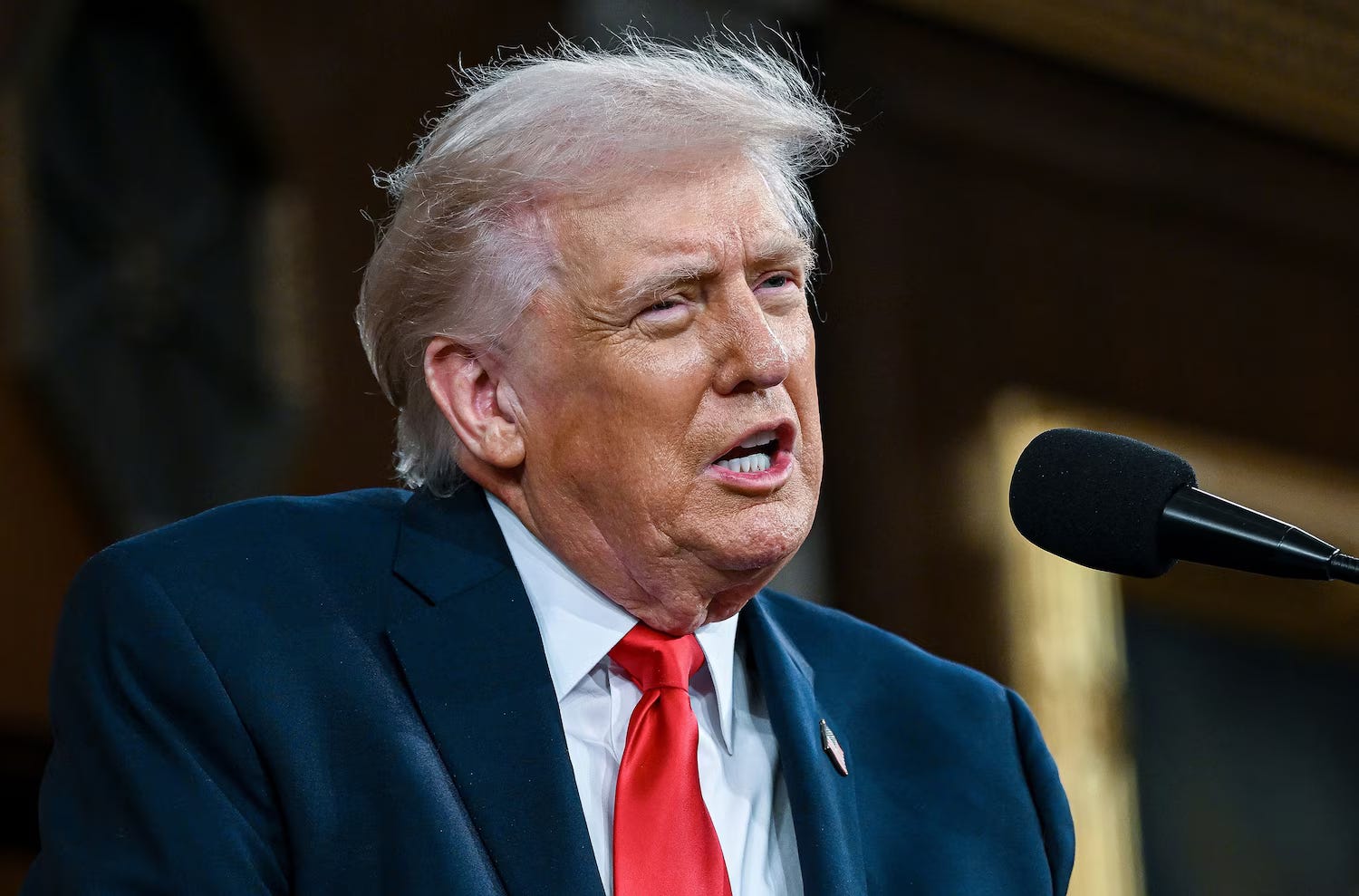
As House Democrats wrap up their three-day annual retreat in Northern Virginia, members are reeling from reports that allies of President Donald Trump are circulating a draft executive order that would assert sweeping federal authority over U.S. elections by declaring a national emergency tied to alleged Chinese interference in the 2020 race.
According to The Washington Post, the 17-page draft argues that Beijing’s purported actions four years ago justify extraordinary presidential intervention in the administration of federal elections. U.S. intelligence agencies previously concluded that while China considered influence operations in 2020, there was no evidence it altered votes or manipulated election infrastructure. Nonetheless, the draft order reportedly lays out a framework for dramatically expanding executive power over election systems that are traditionally governed by states and Congress.
If pursued, the proposal would almost certainly trigger immediate court challenges and a constitutional showdown over the limits of presidential authority in American elections, just as the country heads toward another high-stakes midterm cycle.
House Minority Leader Hakeem Jeffries (D-N.Y.) and House Administration Committee Ranking Member Joe Morelle (D-N.Y.) accused the president of attempting to manufacture conspiracy theories about 2020 as a pretext for consolidating power. They argued that any executive action premised on debunked claims of Chinese interference would be unlawful and pledged that Democrats—and voters—would resist what they characterized as an effort to federalize and potentially manipulate future elections.
Among the ideas described are restricting or eliminating no-excuse mail voting, imposing stricter voter identification requirements, mandating hand-counted paper ballots, and requiring proof of citizenship for voter registration ahead of the 2026 midterms. Legal scholars cited in the report warn that such moves would run headlong into the Constitution’s Elections Clause, which gives states primary authority over the “Times, Places and Manner” of federal elections, subject to congressional oversight, not to unilateral presidential control.
The White House has not announced any finalized executive order. But the mere circulation of such a draft underscores how emergency powers—typically invoked for economic crises or national security threats—could be tested in the electoral arena.
The report lands as the MAGA right intensifies pressure on Senate Majority Leader John Thune (R-S.D.) to scrap the filibuster in order to push through the House-passed SAVE America Act and as the Supreme Court prepares to weigh the future of Section 2 of the Voting Rights Act—the key federal protection against racial vote dilution. The draft executive order adds another front to an already escalating battle over who controls the rules of American elections.
Happenings
All times Eastern.
The House and Senate are out.
President Trump will travel to Corpus Christi, Texas, where he will receive an energy briefing at 4:05 p.m. and deliver remarks at 4:35 p.m. The president will participate in a local TV interview before traveling to Mar-a-Lago for the weekend.
Saturday: President Trump will participate in a MAGA, Inc. meeting at 7 p.m., followed by a MAGA, Inc. dinner at 7:30 p.m. at Mar-a-Lago.
Sunday: The president will return to the White House.

In the Know
— House and Senate Democratic leaders announced they will force votes next week on bipartisan War Powers resolutions requiring congressional authorization before any U.S. military action against Iran. House Democrats plan to compel a vote on the measure sponsored by Reps. Ro Khanna (D-Calif.) and Thomas Massie (R-Ky.) when the chamber reconvenes, while Senate Democrats—led by Senate Minority Leader Chuck Schumer (D-N.Y.), Tim Kaine (D-Va.) and Adam Schiff (D-Calif.)—will use the resolution’s privileged status to bring their version to the floor in the coming days.
— Sens. Ron Wyden (D-Ore.), Bill Cassidy (R-La.) and John Fetterman (D-Pa.) introduced bipartisan legislation to require chip-enabled SNAP cards and updated cybersecurity standards to combat a surge in benefit theft, after a USDA watchdog warned that up to $555 million in funds could be vulnerable in the coming years. The House companion bill is being led by Reps. Dan Goldman (D-N.Y.) and Mike Lawler (R-N.Y.) and would mandate new anti-fraud regulations, fund upgraded payment systems and require faster card replacements for affected families.
— Rep. Ayanna Pressley (D-Mass.) led 52 House Democrats in introducing a resolution marking the 100th anniversary of Black History Month and calling for federal support and protection of Black history museums and cultural institutions amid what she describes as efforts to whitewash or defund them. The measure urges agencies such as the National Endowment for the Humanities and the National Endowment for the Arts to strengthen funding partnerships and encourages Americans to engage with and defend institutions that preserve African American history as the nation approaches its 250th anniversary.
Read All About It
“Trump’s war on national park signs is even dumber than you think” by Dan Freidman: “Inside the administration’s covert campaign against ‘negative’ placards.”
“The merger you should actually care about” by Jon Allsop: “An under-the-radar, Trump-approved deal could create a broadcasting behemoth that controls local news stations across more than forty states. Why do some MAGA diehards oppose it?”
“Why are so many women getting ADHD diagnoses in midlife?” by Caitlin Moscatello: “They’re spotlighting the disorder’s hormonal link—and possibly changing how it’s treated.”