


FIRST THINGS FIRST
👋🏾 Hi, hey, hello! It’s Tuesday morning. Thank you for waking up with Congress Nerd Sunrise. Say hi or send me a tip: michael@onceuponahill.com.
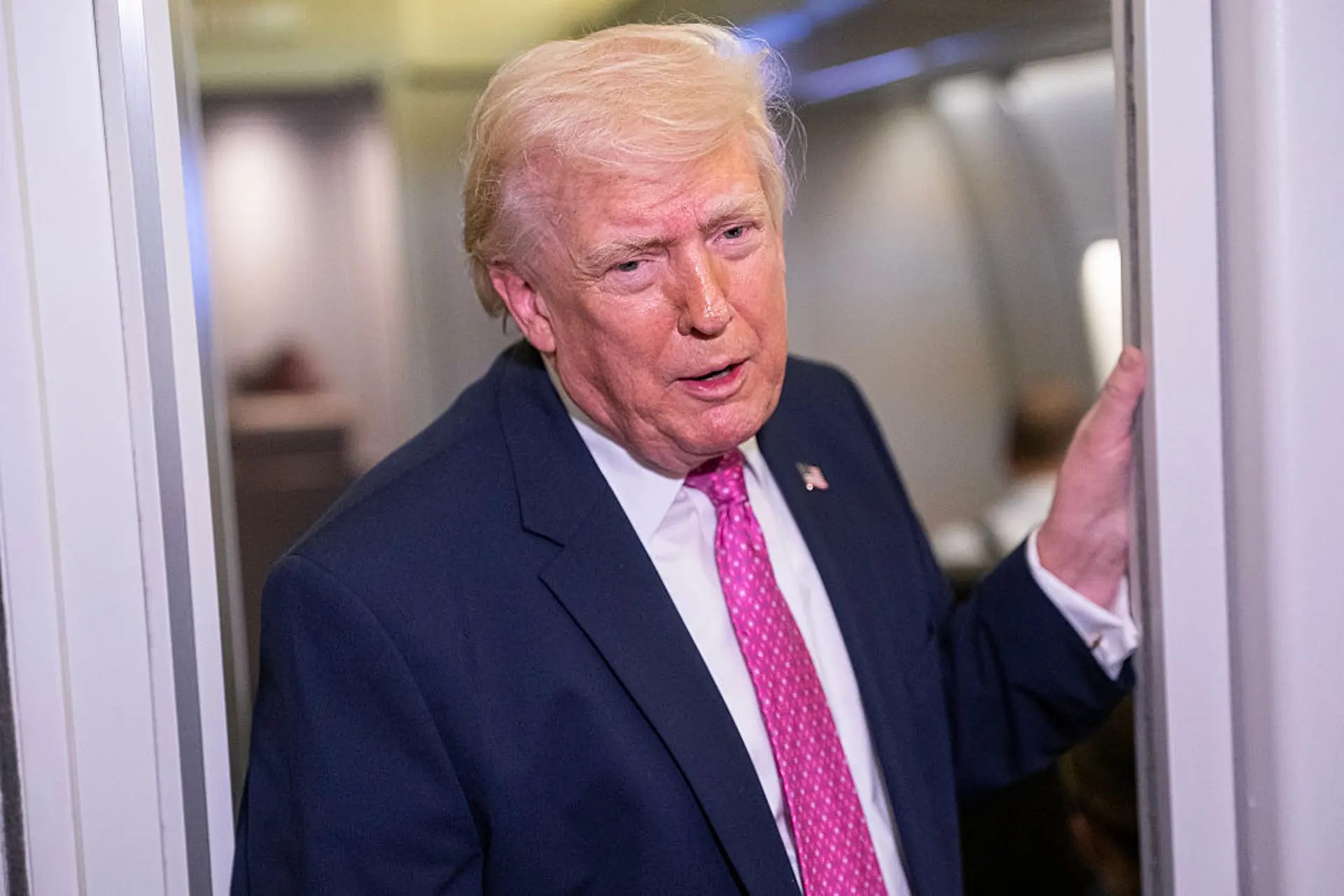
White House Press Secretary Karoline Leavitt said Monday that President Donald Trump is still willing to host an Easter and Passover dinner for Republicans if they cancel recess and return to Washington to pass a bill fully funding DHS. The president first floated the pitch last week as the shutdown stretched into record territory.
But the procedural reality in the Senate makes that scenario unlikely. Lawmakers scheduled a series of pro forma sessions before leaving town that locked in the recess unless every senator agrees to scrap them. That unanimous consent requirement—standard for most Senate business—gives any single member the power to block a return, effectively freezing the chamber in place until mid-April absent a broader deal.
The underlying stalemate hasn’t shifted. Senate Democrats continue to withhold the votes needed to fund Immigration and Customs Enforcement and Customs and Border Protection. Republicans are rejecting the policy changes Democrats have demanded, including new limits on federal immigration enforcement tactics. And there still aren’t enough GOP votes to weaken or eliminate the filibuster, leaving Republicans without a path to pass a DHS funding bill on their own.
The dynamic was on display during Monday’s brief Senate session, when Sen. John Hoeven (R-N.D.) presided but did not attempt to pass the House-approved 60-day continuing resolution by unanimous consent. Sen. Chris Coons (D-Del.) was on the floor and could have objected, but Hoeven never made the ask.
Afterward, Hoeven told reporters Republicans are instead focused on a broader strategy to use the filibuster-proof budget reconciliation process to fund DHS for the next three years alongside a supplemental package tied to the war in Iran and elements of the SAVE America Act. The next pro forma session is scheduled for Thursday morning.
In the meantime, one of the most visible pressure points of the shutdown is beginning to ease.
TSA employees began receiving paychecks and back pay on Monday after working 44 days without compensation, following an emergency directive from Trump to resume pay despite the ongoing funding lapse.
The move appears to be stabilizing airport operations, at least for now. At George Bush Intercontinental Airport in Houston, wait times that had stretched for hours have dropped to just five to 10 minutes. But the recovery is uneven, with delays at LaGuardia Airport still being reported.
ECONOMY
Gas prices hit $4/gallon a month into Iran war
The national average for regular gas hit $4 per gallon, according to AAA, with diesel climbing to roughly $5.45—both sharp increases from about $2.98 and $3.76, respectively, just a month ago. It’s the highest amount since 2022.
The spike is being driven by a sustained disruption in global oil supply, particularly the continued closure of the Strait of Hormuz, a critical transit point for roughly one-fifth of the world’s oil.
Despite repeated claims from President Trump and his allies on Capitol Hill that the war effort is proceeding as planned, energy markets are signaling prolonged instability. Oil prices have surged more than 40% since the conflict began, with traders pricing in the risk that shipping through the strait will remain constrained.
Higher gas prices are squeezing household budgets already strained by inflation, while rising diesel costs are pushing up the price of goods across the economy.
With the midterms seven months away, the price at the pump is emerging as a central test of the administration’s economic agenda and its handling of the conflict abroad. Analysts warn that even if the Strait reopens soon, it could take weeks or months for supply chains and prices to stabilize.
THE COURTS
McIver asks court to toss criminal case
Rep. LaMonica McIver (D-N.J.) has asked a federal appeals court to throw out the criminal case against her in an escalation of the high-stakes legal fight over Congress’s oversight powers and the Trump administration’s immigration enforcement strategy.
McIver and her legal team filed a brief Monday with the Third Circuit arguing that the Department of Justice cannot prosecute a sitting member of Congress for conducting official oversight of ICE and DHS more broadly.
At the center of the appeal is the scope of legislative immunity, the constitutional protection that shields lawmakers from prosecution for actions taken in the course of their official duties.
The case stems from a May 2025 visit to an ICE detention facility in McIver’s district. Federal prosecutors—under then-interim U.S. attorney and former Trump lawyer Alina Habba—charged McIver in connection with that visit. She faces up to 17 years in prison and is the only member of Congress to be indicted by the Trump-era Justice Department for oversight activity.
McIver’s brief argues the charges are both unconstitutional and politically motivated and accuses the administration of attempting to criminalize opposition to its mass deportation agenda. It also alleges that DHS misrepresented the circumstances of her visit in public statements.
In a statement, McIver said she was carrying out her duties and vowed to continue fighting the case.
The filing sets up the next phase of the legal battle. The government has 30 days to respond, and outside groups have until April 6 to weigh in.
ARTIFICIAL INTELLIGENCE
AI adoption is rising, even as trust isn’t
Americans are using artificial intelligence more than ever, but they’re increasingly uneasy about what it means for their lives, jobs and politics, according to a new Quinnipiac poll.
Fifty-one percent of Americans say they’ve used AI to research topics, a sharp jump from last year, with growing use for writing, work projects and data analysis. But that adoption isn’t translating into confidence. Seventy-six percent say they trust AI-generated information only some of the time or hardly ever.
The broader mood is shifting in a more negative direction: Just 35% say they’re excited about AI, while 80% say they’re concerned. A majority—55%—believe AI will do more harm than good in their day-to-day lives, up significantly from 2025.
Concerns about the labor market are particularly pronounced. Seven in 10 Americans think AI will reduce job opportunities, with Gen Z standing out as the most pessimistic despite being the most familiar with the technology.
The takeaway for Washington is clear: The public sees AI as both inevitable and insufficiently governed. Large majorities say businesses aren’t being transparent about their use of AI and that the government isn’t doing enough to regulate it. The state of play sets up a policy debate that’s only going to intensify as the technology becomes more embedded in daily life.
HAPPENINGS
The House and Senate are out.
President Trump will participate in policy meetings at 3 p.m. and 4 p.m. The president and First Lady Melania Trump will attend the opening night of the musical “Chicago” at the Kennedy Center at 7:30 p.m.
READ ALL ABOUT IT
“This is how Trump is already threatening the midterms” by David Gilbert: “WIRED surveyed the ways the Trump administration is working to manipulate this year’s midterm elections.”
“Slow-walking back into an AIDS nightmare” by Tim Murphy: “New cuts could result in ‘the first rise in HIV incidence in decades.’”
“Revisiting ‘The Jetsons’: Where’s my flying car and three-hour workday?” by Nicole Nguyen: “The 1960s version of the future is way more fun than our reality—but when it comes to innovations, we’re catching up.”