


TODAY IN CONGRESS
👋🏾 Hi, hey, hello! Good Friday morning. Thanks for waking up to Congress Nerd Sunrise. Get in touch: michael@onceuponahill.com.
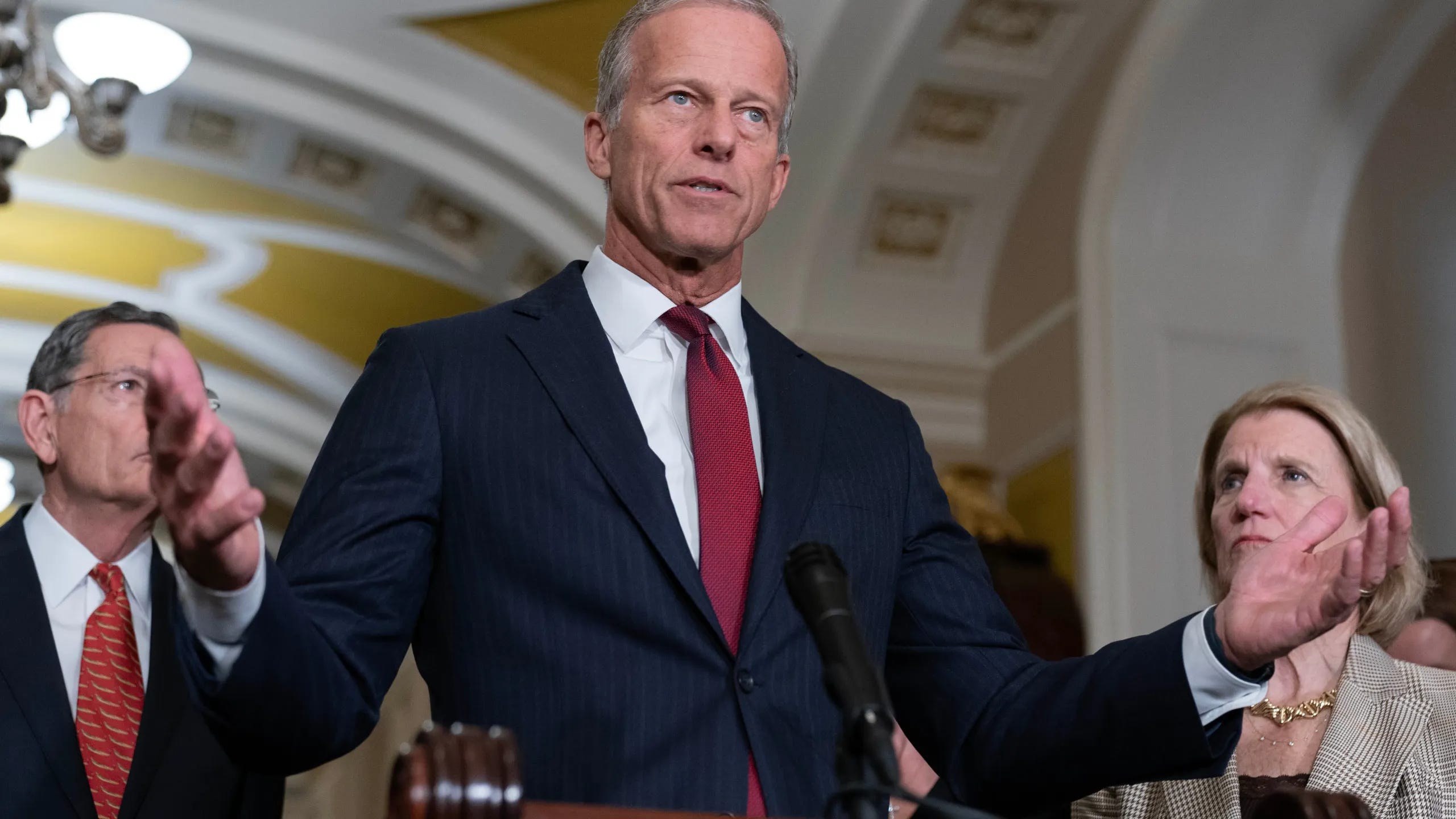
Senate Majority Leader John Thune (R-S.D.) is preparing to bring the SAVE America Act to the floor for what he promises will be a “full and robust debate,” even as President Donald Trump and MAGA-aligned conservatives push him to use more aggressive procedural tactics to force the bill through the chamber.
Thune has resisted calls from Trump allies to rely on mechanisms like a talking filibuster or other maneuvers designed to freeze the Senate floor and force a simple-majority vote. The reason is straightforward: Republicans lack the votes to change Senate rules or otherwise engineer a path around the 60-vote threshold.
As Thune often says when navigating internal GOP divisions, he cannot guarantee the outcome of a debate—but he can guarantee the Senate will have one.
That approach reflects both the limits of the Republican majority and the reality of Senate procedure. Despite the pressure campaign from Trump’s orbit, tactics like the talking filibuster have not been used in modern history to pass major legislation over unified minority opposition. Without the votes to change the rules, Senate Republicans remain constrained by the chamber’s traditional thresholds.
Democrats, for their part, appear more than willing to engage.
The caucus is nearly unified in opposition to the SAVE America Act, which they argue would impose sweeping voting restrictions under the guise of election integrity. But rather than make a fuss about the process, Democratic leaders believe a floor debate could work to their advantage.
A prolonged fight would allow Democrats to highlight what they see as the bill’s most controversial provisions while framing the legislation as a partisan distraction from issues voters care more about, especially the cost of living.
Senate Democrats note that the chamber is juggling several competing priorities, including the confirmation of Sen. Markwayne Mullin’s (R-Okla.) nomination to lead the Department of Homeland Security and the necessity to reach a deal on federal immigration enforcement and end the department’s 28-day shutdown. A drawn-out fight over the SAVE America Act could delay that confirmation and consume valuable floor time.
Democrats also see a broader political benefit.
They argue that forcing Republicans to spend days debating election legislation could divert attention from other policy priorities, including the bipartisan housing bill the Senate passed Thursday with overwhelming support and returned to the House. Party strategists say highlighting that contrast—debating election rules versus addressing housing costs—fits squarely into Democrats’ broader affordability message.
It also reinforces a line of attack that Democrats have increasingly deployed: that the president is more focused on political grievances than on the economic pressures many Americans face.
Whether that argument resonates beyond Capitol Hill remains to be seen. But what’s for sure is the Senate is heading toward a debate that could stretch well into next week that tests Republican unity, gives Democrats a national stage to attack the bill, and adds another procedural fight to an already crowded Senate calendar.
HAPPENINGS
All times Eastern.
The House and Senate are out.
President Trump will participate in executive time at 8 a.m., sign executive orders at 2 p.m. and greet the winners of the National Finals Rodeo at 3 p.m. before traveling to Mar-a-Lago.
Saturday: Trump will participate in executive time at 8 a.m. and a MAGA Inc. roundtable dinner at 7:30 p.m.
Sunday: The president will participate in executive time at 8 a.m. and will later return to the White House.

IN THE KNOW
— Sen. Elissa Slotkin (D-Mich.) will address the violent attack on a Michigan synagogue this afternoon in Oakland County after an armed man rammed a vehicle into Temple Israel in West Bloomfield Township and opened fire before being killed by security. The FBI is investigating the incident as a targeted act of violence against the Jewish community.
— Sen. Martin Heinrich (D-N.M.) and seven Senate Democrats introduced the Tariff Refunds for Working Families Act, a proposal to send tax rebates to Americans to offset higher costs from President Trump’s tariffs. The bill would fund rebates with tariff revenue—up to $600 for individuals and $1,200 for joint filers, plus $600 per child—after a Joint Economic Committee report estimated the tariffs have cost families more than $1,700 on average.
— Rep. John Larson (D-Conn.) and Sen. Jack Reed (D-R.I.) reintroduced the ACTION for National Service Act, a proposal to expand AmeriCorps and other service programs while helping young Americans pay for college. The bill would allow volunteers who complete two full terms of service to earn an education benefit equal to four years of average in-state tuition.

READ ALL ABOUT IT
“Nancy Pelosi is really trying to make Jack Schlossberg happen” by Nia Prater: “The former House Speaker cut an ad for JFK’s grandson in his race for Congress, but Michael Bloomberg dropped a dueling endorsement.”
“The zombie regulator” by E. Tommy Kim: “As the cost of living continues to spiral upward, the Trump administration is gutting the government agency built to protect Americans from financial ruin.”
“The pro-MAGA press can’t agree on how to cover Trump’s war on Iran” by Anna Merlan: “A combination of fight, flight, fawn, and freeze.”