


👋🏾 Hi, hey, hello! Good Thursday morning. Thank you for waking up with Congress Nerd Sunrise.
📌 New this morning: Republicans race to entrench power across the South … Democrats hold edge in new Marist poll despite enthusiasm gap … Democrats question how BNPL loans affect credit scores
📬 Send me tips, scoops or just say hi: michael@onceuponahill.com
○ ● ●
FIRST THINGS FIRST
Republicans race to entrench power across the South
In the week since the Callais ruling weakened a key Voting Rights Act protection, Republican officials across several Southern states have accelerated efforts to revisit congressional maps in ways that could strengthen the GOP’s grip on power while diluting Black voting strength.
With primaries already underway in some states and the midterms rapidly approaching, the post-Callais push underscores how redistricting is evolving from a once-a-decade process into an ongoing power struggle, with Republican legislatures seeking ways to maximize their House advantage through state-controlled maps.
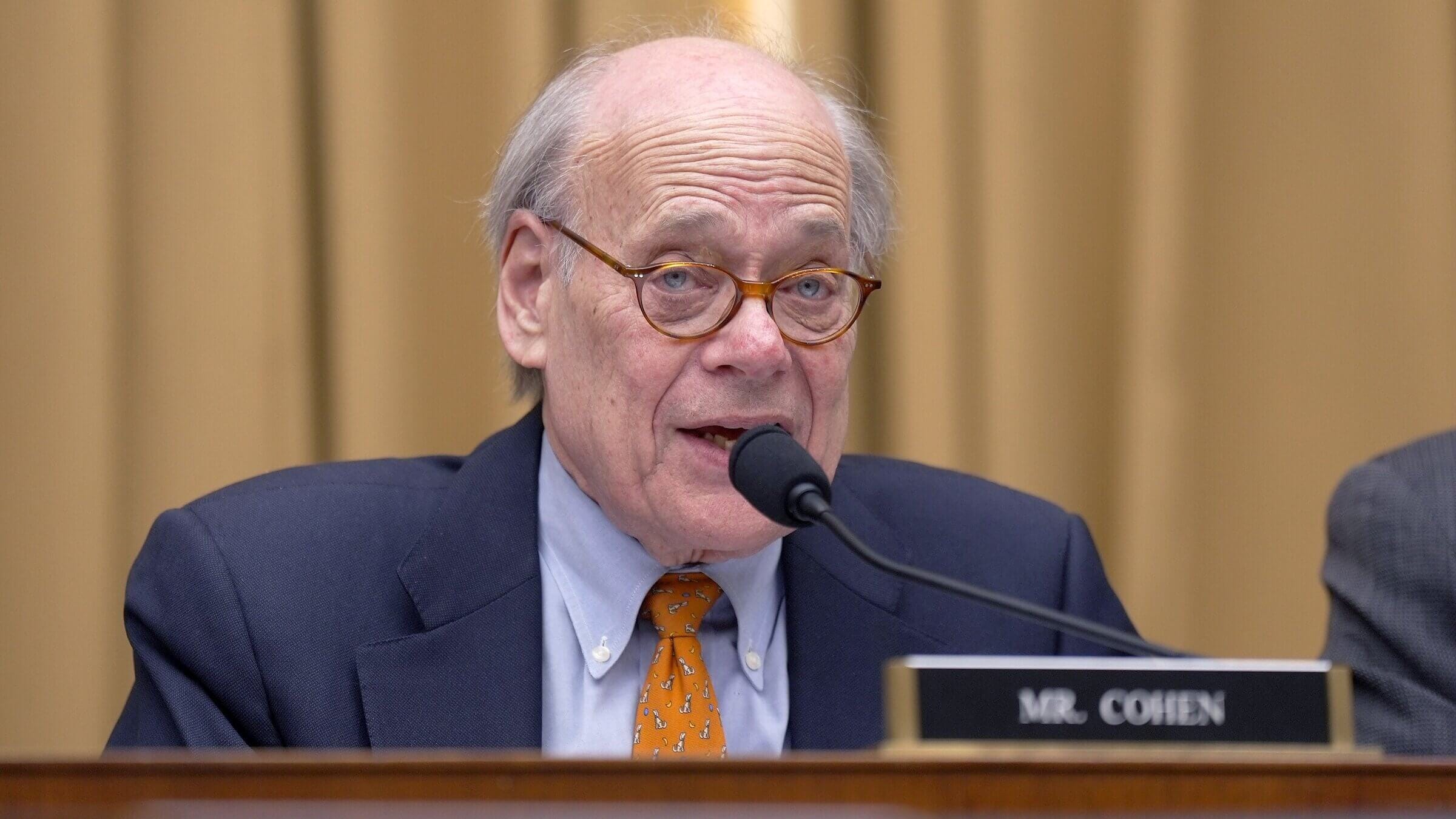
“This is insane,” Rep. Steve Cohen, the lone Democrat in Tennessee’s congressional delegation, said of the state’s new proposed map that would crack Memphis across multiple districts. “It’s a blatant, corrupt power grab that would destroy the Black community’s and our entire city’s voice.”
The new map Tennessee unveiled on Wednesday would create a 9–0 delegation, with each district comprising a seat that President Trump won by at least 20 points in 2024.
Below is a roundup of the current state of play across the rest of the South:
Louisiana: Gov. Jeff Landry has suspended the state’s congressional primaries this month to give Republican lawmakers time to redraw the map, with the expectation that the state could move from a 4R-2D delegation to a 5R-1D map by eliminating the second majority-Black district created under prior Voting Rights Act standards.
Alabama: Republicans hope to use the Supreme Court’s recent Voting Rights Act ruling to overturn or replace the court-ordered map that created a second Black-opportunity district, though there’s conflicting messaging inside the state GOP about whether a redraw will happen immediately.
South Carolina: Republican lawmakers are laying the groundwork for a possible special session to redraw the state’s congressional map, with Democrats warning the effort could target Rep. Jim Clyburn’s neighboring Democratic district and further lock in GOP control.
Mississippi: Republicans are under growing pressure from Trump allies to redraw the map in a way that could weaken or eliminate Rep. Bennie Thompson’s district, though logistical and legal hurdles have slowed any formal congressional redraw so far.
Georgia: The Peach State’s congressional map remains under litigation tied to Voting Rights Act claims, but Republicans view Callais as a potential opening to protect or expand their current advantage without creating additional Black-opportunity districts.
Florida: Gov. Ron DeSantis just signed a new congressional map expected to net Republicans up to four additional GOP-friendly seats, immediately triggering lawsuits alleging violations of the state’s Fair Districts anti-gerrymandering protections.
Meanwhile, Democrats are already challenging the new GOP maps in court while pushing to remove remaining redistricting guardrails in blue states ahead of the 2028 cycle.
● ○ ●
2026 MIDTERMS
Democrats hold edge in new Marist poll despite enthusiasm gap
President Trump’s numbers are softening almost everywhere outside the core Republican coalition, while Democrats are showing signs of a favorable midterm environment without fully resolving their own enthusiasm gaps, according to a new Marist Poll.
Democrats lead the generic congressional ballot 52%-42%, a notable edge in a political environment where control of the House is likely to hinge on a small number of competitive districts. (Democrats posted similar advantages in several Marist polls during the 2018 cycle before retaking the House.)
But Republican voters are actually slightly more enthusiastic about voting this November than Democrats, 82% to 79%—a sign that while Democrats currently hold the broader political advantage, the GOP still retains the intensity edge. That’s a warning light for Democrats who assume anti-Trump sentiment alone will drive turnout.
“The +10 is anti-Trump and pro-checks-and-balances,” a Democratic operative told me. “The lack of enthusiasm is a lack of clarity on what Democrats stand for and what they will do with their majority.”
While the two largest ideological caucuses have rolled out agendas outlining policies Democrats could pursue if they flip the House in November, some members and aides have privately expressed anxiety about making explicit promises when their ability to deliver would depend heavily on the size and makeup of a potential majority, as well as the political realities of the moment.
“Politics is like football. Don’t play if you’re scared because you’re going to get yourself hurt,” the operative said. “Democrats have to be clear on what they stand for. Republicans are going to attack you either way.”
Trump’s overall job approval sits at 37% approve and 59% disapprove, including a 51% “strongly disapprove” number. The erosion is especially pronounced among independents (63%-32%), voters under 45 (63%-31%), women (63%-32%) and college graduates (65%-33%). Older, rural, white voters without college degrees remain his strongest base of support.
The economy numbers are particularly striking because that has traditionally been Trump’s strongest issue. Yet voters disapprove of his handling of the economy by a 61%-35% margin.
The foreign policy findings tell a similar story. Voters say Trump has weakened America’s role on the world stage by a 62%-38% margin. And on Iran, he’s underwater 60% to 33%, with more respondents saying U.S. military action in Iran has done “more harm than good” than the reverse (61%-38%).
Taken together, the poll paints a country uneasy with Trump’s governing style, skeptical of his handling of the economy and foreign affairs, and increasingly open to Democrats serving as a check on unified Republican power.
● ● ○
ECONOMY
Democrats question how BNPL loans affect credit scores
Senate Democrats are pressing the nation’s biggest credit reporting agencies on how they plan to navigate the rapid rise of Buy Now, Pay Later loans in a system with few consistent rules, little transparency and uneven consumer protections that could affect millions of Americans’ credit scores in ways borrowers may not fully understand.
At the center of the concern is a growing disconnect between the explosive growth of BNPL products and the credit reporting industry's outdated infrastructure. Some BNPL lenders report loans to credit bureaus while others don’t. Some credit bureaus incorporate the data, while others may treat it differently. Consumers, meanwhile, often have little visibility into how any of it affects their credit profiles.
“Until all relevant parts of this industry align on the use of BNPL data, consumers are left in limbo where BNPL data from a subset of lenders is provided to a subset of credit reporting companies with varying impacts for consumers,” Senate Banking Committee Ranking Member Elizabeth Warren (D-Mass.) and Sens. Tammy Duckworth (D-Ill.), Richard Blumenthal (D-Conn.) and Mazie Hirono (D-Hawaii) wrote this week to Experian, Equifax and TransUnion. “Given the exceptional growth in the BNPL industry in recent years, BNPL loans are becoming a larger part of consumer’s credit pictures at the same time that Americans are under historic financial pressures.”
The scrutiny comes as more Americans turn to services like Klarna, Affirm and Afterpay to cover groceries, utilities and other basic expenses amid persistent financial strain. LendingTree reported that 54% of BNPL users this year said they relied on the loans to cover essentials, while 47% said they missed at least one payment in the past year.
The latest push builds on Congress Nerd’s reporting last December on growing Democratic scrutiny of the lightly regulated BNPL industry as consumers increasingly use multiple installment-payment apps at once to manage cash flow and stretch monthly budgets.