


👋🏾 HI, HEY, HELLO! Welcome back to Congress Nerd Daily. I hope today was everything for you. The midterms are in 34 days.
FIRST THINGS FIRST: It’s the final day of the fiscal year, and for once I’m not writing to you about a government shutdown showdown. Instead, the Senate is trying to clear the decks before lawmakers leave Washington for the October recess, though attendance could complicate Republican leaders’ plans.
GOP leadership is trying to line up the votes on several expiring Congressional Review Act resolutions that Republicans want to pass before senators leave town. Leaders are also seeking a time agreement with Democrats to speed up a final confirmation vote on Keith Sonderling to be Labor secretary after the Senate advanced his nomination 53–47 along party lines this afternoon. The catch is whether Republicans can keep enough senators around to finish everything.
Meanwhile, Democrats blocked the Stop Insider Trading Act and Ratepayer Protection Act from advancing, as expected. The Stop Insider Trading Act failed 53–47 along party lines. The Ratepayer Protection Act fell short 57–43, with four Democrats—Maggie Hassan (N.H.), Amy Klobuchar (Minn.), Jon Ossoff (Ga.) and Raphael Warnock (Ga.)—joining every Republican in support.
Senate Majority Leader John Thune told reporters this morning that “the momentum is building toward wrapping it up today,” but couldn’t say with certainty that senators would be finished. Asked whether there could be more votes after this afternoon’s originally scheduled series, he told us: “Let me get back [to you].”
VIEW FROM THE HILL
Senators struck a sweeping bipartisan deal this afternoon to make it easier to build energy and infrastructure projects across the country, breaking through months of negotiations that at times looked destined to become Congress’s latest failed attempt at permitting reform.
The Bipartisan American Affordability and Jobs Act would overhaul federal environmental reviews, speed up project decisions, expand the nation’s electric grid, and require data centers to pay the incremental transmission costs needed to serve their enormous demand for power.
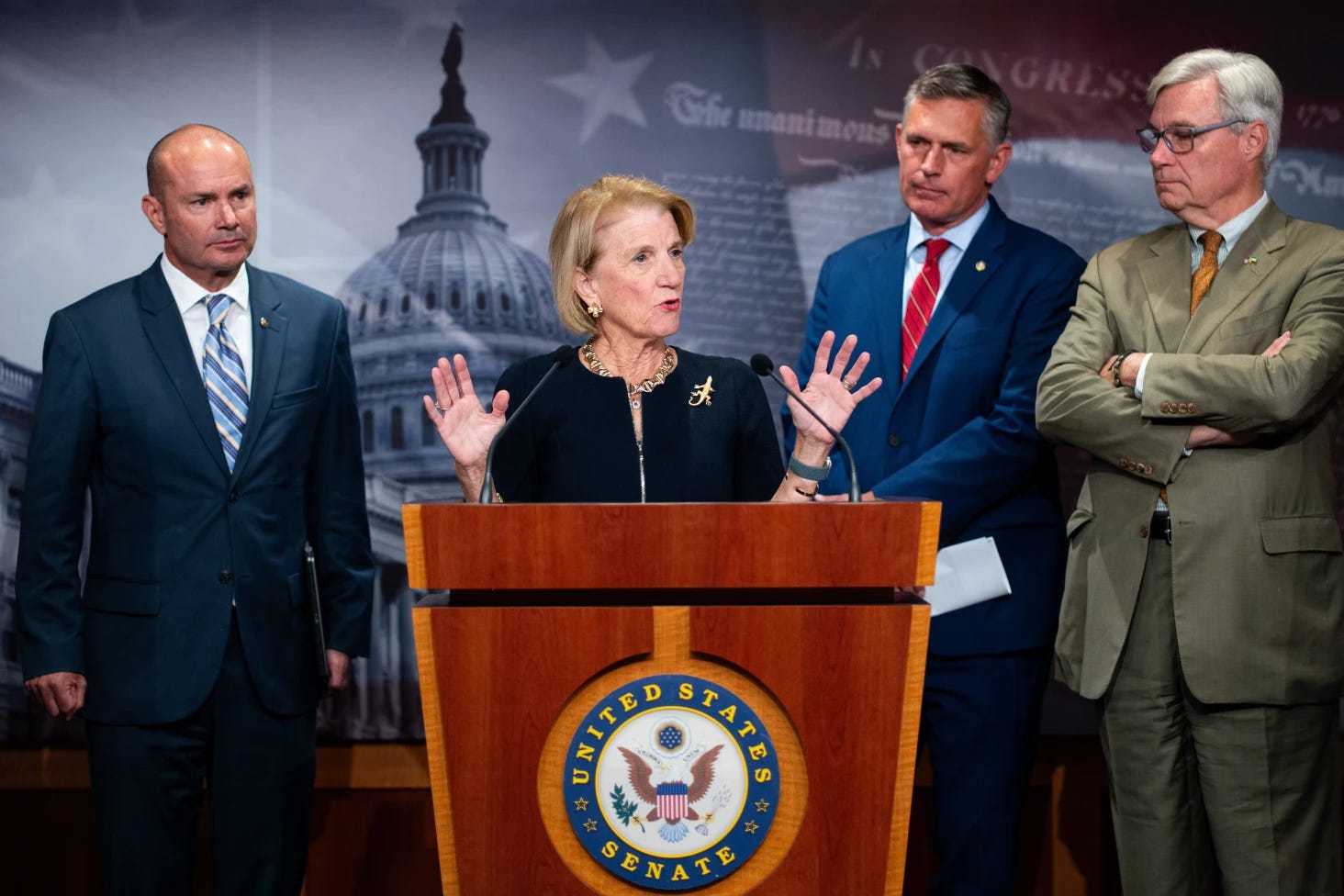
The agreement is the product of an unusual four-way negotiation between Senate Environment and Public Works Chair Shelley Moore Capito (R-W.Va.) and Ranking Member Sheldon Whitehouse (D-R.I.), along with Energy and Natural Resources Chair Mike Lee (R-Utah) and Ranking Member Martin Heinrich (D-N.M.).
And getting there required something less technical than the hundreds of pages of legislative text the four senators released earlier today: patience, trust and, in Heinrich’s case, stubbornness.
“I’m really stubborn,” Heinrich told me after the senators announced the agreement. “So we just kept going back to the table.”
That persistence stemmed from Heinrich’s experience with SunZia, a 550-mile transmission line carrying wind power across New Mexico and Arizona that took 17 years to permit and build.
Heinrich, who has worked on the project since arriving in Congress in 2009, told me he was willing to “burn a lot of time and political capital” on permitting reform because projects should reach a yes-or-no decision much faster.
“Some projects aren’t good. Some projects shouldn’t go forward,” he said. “But you should be able to get to yes or no a lot faster than we currently do.”
The bill attempts to do that by changing the National Environmental Policy Act, the Clean Water Act, the Endangered Species Act and historic-preservation reviews. It would impose deadlines on environmental reviews, limit some litigation and make permits harder to undo once issued.
The other half of the bargain tackles energy development and the grid.
