


👋🏾 HI, HEY, HELLO! Welcome back to Congress Nerd Sunday. I hope your weekend was everything for you. I’m wishing Rep. Marcy Kaptur (D-Ohio) a speedy recovery following her hospitalization after she was involved in a hit-and-run crash this morning.
THE LINEUP
Senate unveils bipartisan plan to avert shutdown
Trump says Iran deal framework emerging (again…)
Blanche standoff persists
Kids online safety markup on tap
Max Miller digs in
THE LEAD
Senate appropriators unveiled a bipartisan continuing resolution this afternoon that would keep the government funded through Dec. 11, giving lawmakers their clearest path yet to avoiding a government shutdown while postponing the biggest spending decisions until after the November elections. The legislation sets up a key procedural vote tomorrow evening, when senators will decide whether to begin debating the stopgap measure.
The proposal largely delivers on Senate Majority Leader John Thune’s (R-S.D.) promise of a “clean” continuing resolution. Rather than using the must-pass legislation to advance sweeping policy priorities, negotiators assembled a temporary funding measure that largely extends current spending levels while pairing them with a limited package of targeted funding anomalies and expiring authorizations intended to keep agencies operating through the fall.
The Senate measure would replace the House-passed stopgap approved last month, extending the funding deadline one additional week—from Dec. 4 to Dec. 11—and expanding the package of bipartisan provisions needed to bridge Congress into the lame-duck session.
The legislation also amounts to an acknowledgment that Congress will once again miss its Sept. 30 deadline to fund the government through the regular appropriations process. Instead, leaders in both parties are focused on preventing a shutdown now and leaving the year’s biggest spending decisions for the lame-duck session after the election when voters will have weighed in on the balance of power in Washington.
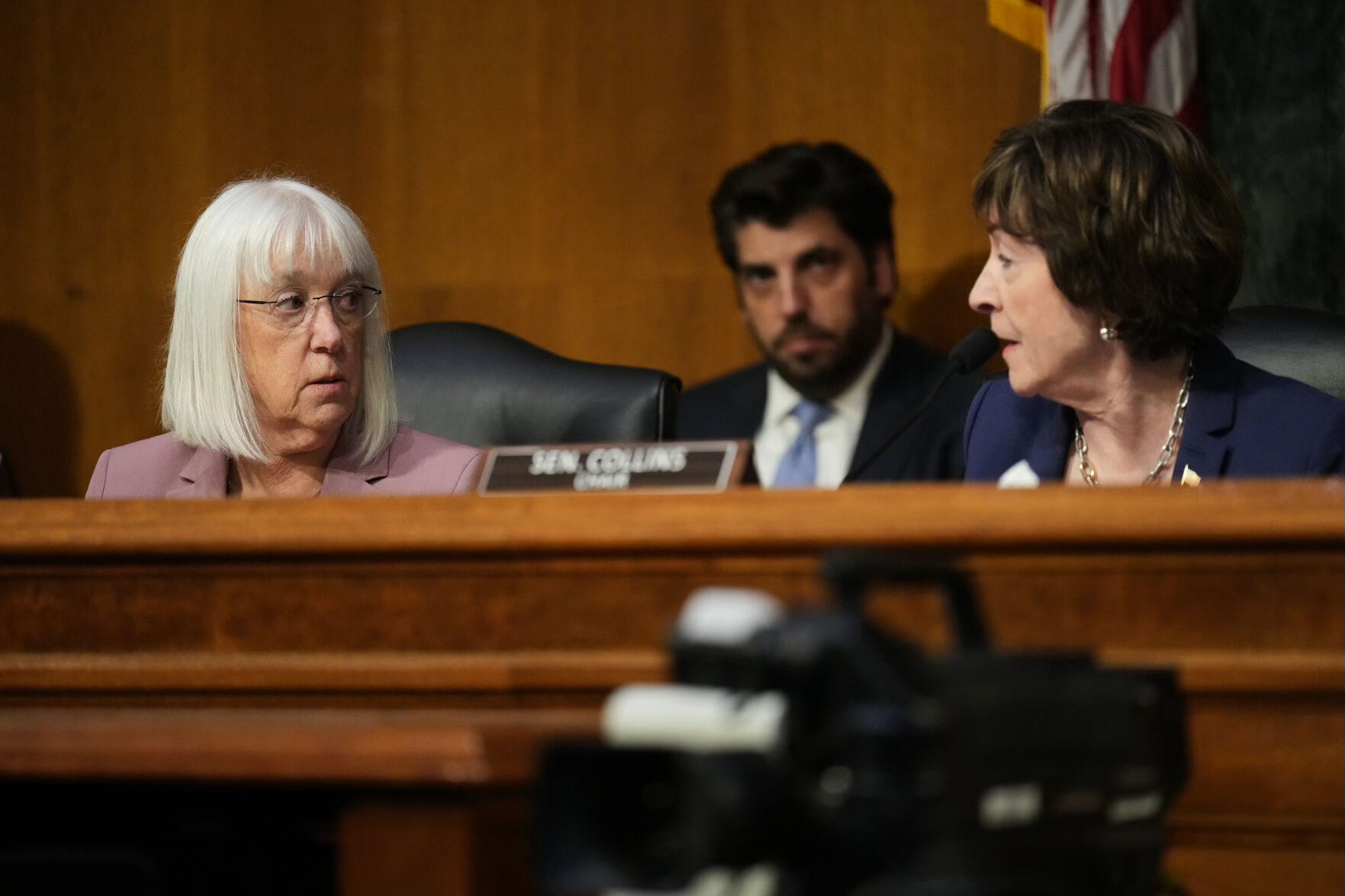
The bill reflects weeks of bipartisan negotiations led by Senate Appropriations Chair Susan Collins (R-Maine), whose committee worked with Senate Democratic leaders and the White House Office of Management and Budget to determine which funding exceptions were necessary to prevent disruptions under a temporary spending bill.
Those exceptions, known as anomalies, have been among the most closely watched pieces of the negotiations.
Rather than opening the door to broad policy changes, the Senate proposal focuses primarily on keeping existing government operations on track. The bill includes targeted flexibility for FEMA’s Disaster Relief Fund, wildfire suppression efforts, the Women, Infants and Children nutrition program, Small Business Administration lending, Census preparations, NOAA weather satellite launches, Justice Department litigating divisions, FBI preparations for the 2028 Olympics, Navy shipbuilding, National Nuclear Security Administration projects, Essential Air Service and housing assistance programs, among other operational priorities.
The legislation also serves as a vehicle for extending a number of authorities that would otherwise expire this fall, including the Defense Production Act, surface transportation programs, veterans’ health and housing programs, cybersecurity authorities and the African Growth and Opportunity Act.
It includes one notable policy provision beyond the funding fixes as well. The bill would prevent OMB’s proposed overhaul of federal grants guidance from taking effect, preserving the current rules governing federal financial assistance. The provision drew bipartisan support, with Collins arguing the proposed rule could politicize grants and harm rural communities, families and biomedical research.
Notably absent are the kinds of partisan policy riders that often complicate stopgap funding fights.
Unlike the House, where Republicans approved their version largely along party lines, Senate Republicans need Democratic votes to clear the chamber’s 60-vote threshold. The result is a product that appears designed less to deliver ideological victories than to attract broad bipartisan support.
Senate Minority Leader Chuck Schumer (D-N.Y.) has repeatedly insisted that any continuing resolution must remain bipartisan and cannot become a vehicle for simply advancing President Donald Trump’s agenda. Monday’s cloture vote will provide the first public test of whether Democratic leaders believe the legislation meets that standard—or whether negotiators still have work to do before the Senate can move toward final passage.
If senators vote to advance the bill, attention will quickly shift from whether Congress can avoid a shutdown to a more consequential question of leverage, if any, either party gains from waiting until the lame duck to finish funding the government for the rest of fiscal 2027.
🔓 The Sunday edition is free. But if you want Once Upon a Hill in your inbox each evening, upgrade your subscription for full access to every edition and the complete archive. Whether you’re taking the votes, writing the bills, running the campaigns, shaping the message or trying to influence any of the above, Congress Nerd Daily helps you see around corners before everyone else catches up.
THE POWERS THAT BE
Trump says Iran deal framework emerging: President Trump said he called off a planned military strike against Iran after what he described as requests from Iran and other Middle Eastern countries to allow negotiations to continue, claiming on Truth Social that the “perimeters of a deal” have been agreed to. Trump said the framework would include the immediate reopening of the Strait of Hormuz and “an end to Iran’s nuclear threat,” adding that Israel supports the effort, but neither the administration nor the governments of Iran and Israel had publicly released details confirming the proposed agreement as of Sunday afternoon.
Blanche’s nomination remains in jeopardy: President Trump doubled down on his push to confirm Todd Blanche as attorney general, threatening to keep him on as acting attorney general while reviving his call for a $1.8 billion anti-weaponization fund if retiring Sens. Thom Tillis (R-N.C.) and John Cornyn (R-Texas) continue blocking the nomination. Tillis, who acknowledged Blanche is qualified to serve, warned that Trump’s renewed insistence on the fund—which he said lacks support from most Senate Republicans—has put the nomination at risk ahead of Tuesday’s rescheduled Judiciary Committee meeting, where Republicans need unanimous support to advance Blanche.
New spy chief: Acting Director of National Intelligence Bill Pulte said he’ll hand the reins to Senate-confirmed Director of National Intelligence Jay Clayton on Monday, nearly a week after the Senate approved Clayton’s nomination in a party-line vote. The transition ends Pulte’s brief and often controversial tenure atop the nation’s intelligence community and installs Trump’s permanent pick to oversee the country’s 18 intelligence agencies.
📬 The best stories often start with a conversation. If you’ve got insight, context or something others are missing, my inbox is open. Send me tips, scoops or just say hi: michael@onceuponahill.com.
THE POLICY DESK
College sports push: The Big Ten and SEC have thrown their support behind the bipartisan Protect College Sports Act, giving Senate Commerce Chair Ted Cruz (R-Texas) and bill sponsors fresh momentum as they press for a floor vote before lawmakers leave for the August recess. Backers argue the legislation would establish a national framework for college athletics and curb the growing legal uncertainty surrounding NIL, athlete compensation and eligibility, while supporters say the endorsement from the country’s two most powerful athletic conferences signals broad institutional backing for congressional action.
Kids online safety markup on tap: Senate Commerce will take up a sweeping package of bipartisan legislation on Wednesday morning aimed at tightening safeguards for children online, including measures on social media, AI chatbots, age verification and AI-powered toys. The bills reflect Congress’ accelerating push to establish national guardrails for how technology companies design products for minors, even as lawmakers continue to wrestle with where to draw the line between protecting children and preserving privacy, free expression and innovation.
Johnson’s Medicaid agenda: Senate Budget Chair Ron Johnson (R-Wisc.) will use his first hearing with the gavel to spotlight Medicaid in a clear indication that overhauling the safety-net program will remain a top priority for one of the Senate GOP’s most outspoken advocates for entitlement reform and spending cuts. With witnesses from conservative policy groups expected to focus on program integrity, eligibility standards and long-term costs, the hearing offers an early look at the arguments Republicans are likely to make as they prepare for the next round of budget and health care negotiations with the House and White House.
AI pricing under scrutiny: A Senate Judiciary subcommittee will examine whether artificial intelligence is enabling companies to charge consumers different prices for the same goods and services, putting a spotlight on growing concerns over algorithmic pricing and digital surveillance in the marketplace. The hearing reflects rising bipartisan interest in whether existing antitrust and consumer protection laws are equipped to police AI-powered pricing tools that critics warn could reduce competition, erode privacy and drive up costs.
Social Security spotlight: The Senate Finance Committee will examine competing approaches to shoring up Social Security’s long-term finances, kicking off what could become one of Congress’ biggest fiscal debates even if major legislation remains politically out of reach this year. With the trust fund projected to face automatic benefit cuts in the coming years absent congressional action, the hearing offers an early look at the ideas lawmakers hope will shape the next bipartisan conversation on the program’s future.
Worth watching: Elsewhere on Capitol Hill, senators will explore how greater competition could lower prescription drug costs, examine how the rapid growth of prediction markets is affecting tribal communities, hear from experts on expanding access to capital for Main Street businesses, review efforts to combat global scam operations targeting Americans and receive a closed-door briefing on the ongoing war in Sudan. Another Senate Judiciary subcommittee will also hold a hearing on the Muslim Brotherhood’s presence in America, as part of the Republican majority’s continued focus on national security and domestic extremism.
THE TRAIL
Miller digs in: Rep. Max Miller (R-Ohio) said he’s staying in the race despite a public call from Sen. Bernie Moreno (R-Ohio)—his former father-in-law—to end his reelection bid, releasing a roughly 20-minute video on X and a cache of documents he says disprove allegations of domestic violence and child abuse made by Moreno’s daughter, Emily Moreno. The extraordinary split between two prominent Ohio Republicans comes just days before the deadline for Republicans to replace Miller on the November ballot. Miller accused Moreno of caving to political pressure while insisting, “I’m not getting out of this race, and I’m winning in November.”
Michigan’s moment: Democrats will decide one of the year’s highest-profile primaries on Tuesday between Rep. Haley Stevens (D-Mich.) and former Wayne County health director Abdul El-Sayed as the party’s establishment and progressive wings battle for the Senate nomination in a race that has drawn enormous outside spending and national attention. Beyond determining who faces Republicans this fall, the result will offer fresh clues about which message—and which faction—is resonating most with Democratic primary voters heading into the midterms. Voters will also head to the polls this week in Virginia, Kansas, Missouri, Washington, Tennessee and Hawaii, continuing a busy August stretch that will help shape the November midterm map.