


First Things First
The expiration of the One Big Beautiful Bill Act’s one-year Medicaid funding restriction on Planned Parenthood has ended one of the anti-abortion movement’s biggest congressional victories since the Supreme Court overturned Roe v. Wade. But neither supporters nor opponents expect the fight to end there.
The provision, which expired over the July 4 weekend, barred Medicaid reimbursements to providers that perform abortions beyond the narrow exceptions permitted under federal law, including most Planned Parenthood affiliates. Although Medicaid already cannot generally pay for abortions under the Hyde Amendment, the provision prevented Planned Parenthood from receiving Medicaid reimbursements for other covered health services, including contraception, cancer screenings and STI testing.
Now that the restriction is no longer in effect, Planned Parenthood says its health centers in eligible states can once again bill Medicaid for covered services. But the organization’s political arm expects congressional Republicans to pursue another attempt to permanently cut off federal funding, potentially through a future reconciliation package or another legislative vehicle.
A year of disruption: Nora Walsh-DeVries, vice president of political and legislative affairs at Planned Parenthood Action Fund, said the provision’s expiration offers immediate operational relief, but cannot undo what she described as lasting damage from the past year.
“From a practical perspective, based on the statutory text and what we can understand from the Big Not-So-Beautiful Bill, as we like to call it, we understand that, as of July 4, Planned Parenthood health centers that are in eligible states should be able to bill Medicaid for services provided starting on that day and going forward,” Walsh-DeVries told me this afternoon. “So, from a practical perspective, that is what we know to be true.”
The organization released a report last week arguing that nearly 30 Planned Parenthood health centers closed during the year the restriction was in effect, affecting clinics that collectively served about 41,000 birth control patients annually. The report also says Medicaid visits fell by roughly 25%, or more than 250,000 visits, compared with the previous year.
Walsh-DeVries said the impact extended beyond abortion services.
“After a year of defund, nearly 30 of our health centers have closed, and tens of thousands of patients have been forced to either forgo access to essential lifesaving care or potentially get it somewhere else, if that was even really on the table,” she said. “Patients really paid the cost of this very politically motivated attack.”
She also pointed to disparities among states.
“We know that in states that did not make emergency funds available to cover the cost for Medicaid patients at Planned Parenthood, or that only could cover the cost partially, health centers closed at double the rate compared to states that fully covered the cost of care that was taken away by defunding,” Walsh-DeVries said.
Planned Parenthood’s report says 14 states committed more than $400 million in emergency funding to help offset the loss of Medicaid reimbursements.
Congress isn’t finished: The provision’s expiration comes as anti-abortion organizations continue pressing congressional Republicans to permanently end federal funding for Planned Parenthood—a long-standing priority that gained new momentum after the Supreme Court’s Dobbs decision returned abortion policymaking to elected officials.
Walsh-DeVries said Planned Parenthood is already preparing for another legislative fight.
“It’s definitely the next phase,” she said. “We absolutely know that, despite this expiration, we’re still really on the defense and know that Republicans are going to stop at nothing to try to permanently defund Planned Parenthood, whether that’s through a third reconciliation bill or something else. It’s just something we have to be constantly preparing for.”
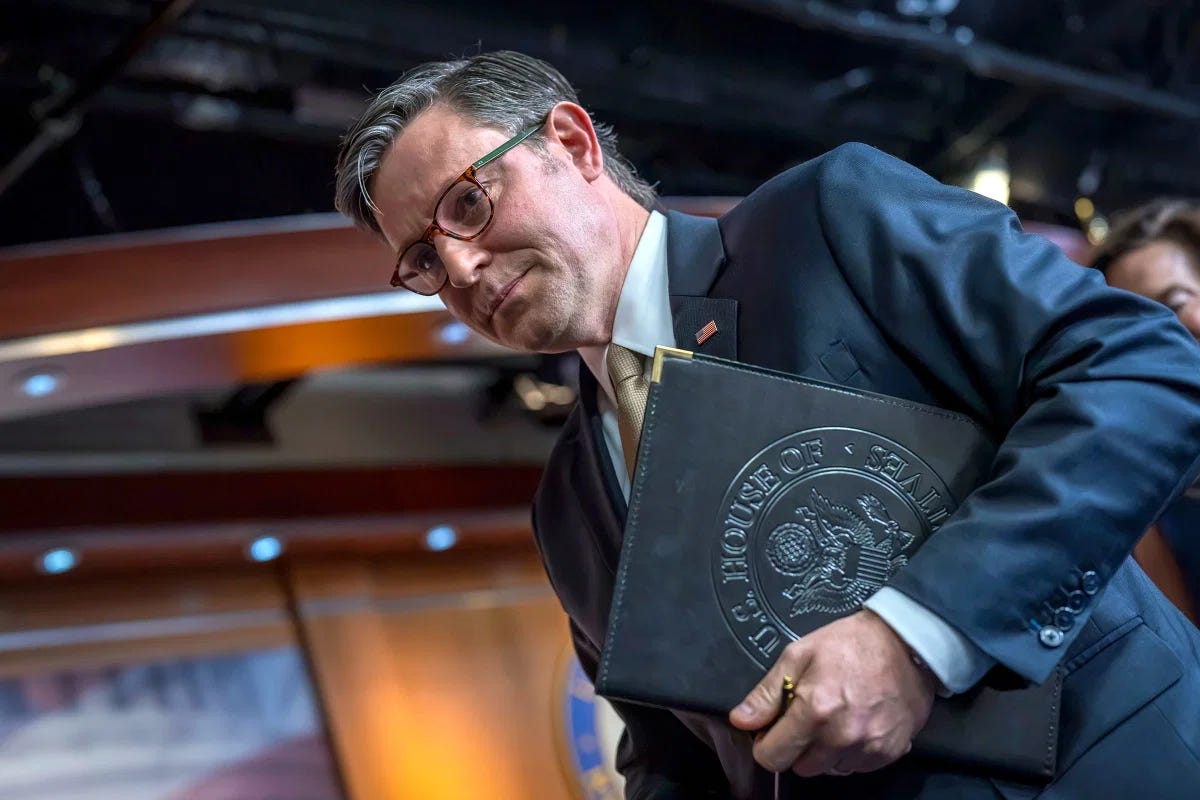
Speaker Mike Johnson (R-La.) reiterated his interest in a third party-line reconciliation bill yesterday on Fox News. The House Freedom Caucus sent Johnson a letter last week with a series of demands for reconciliation 3.0, including an extension of the defund provision.
Walsh-DeVries also identified the annual Labor-HHS appropriations bill as another measure the organization is watching closely.
“I think definitely another reconciliation package. And then the Labor-HHS bill that’s in the House right now includes a defund too,” she said. “Any moving legislation—they can always try to slide something in there that has a defund question.”
Spokespeople for Susan B. Anthony Pro-Life America and Americans United for Life did not respond to requests for comment before publication.
Walsh-DeVries argued the policy failed to achieve its stated objective when I asked her what she would tell lawmakers who supported the provision.
“The real-life implications here is that people were not able to receive all kinds of care,” she said. “Cancer screenings went down, birth control visits went down—all the gamut of the proactive health care that we provide that keeps people healthy, that keeps people safe. You didn’t make abortion less likely to happen in this country. You just made people less safe, and you gave people less choices as to where they can get good, high-quality health care.”
Despite the expiration, Walsh-DeVries said Planned Parenthood views the past year as a preview—not the conclusion—of the congressional battle over reproductive health funding.
“The provision has expired, but the threat is still really, really, really there.”
👋🏾 Hi, hey, hello! Thank you for reading Congress Nerd Daily. It’s recess so members are abroad on official foreign visits or as part of congressional delegations, as you’ll read below. Sen. Tammy Duckworth (D-Ill.) is in Taiwan to underscore the United States’s support for Taiwan’s democracy following a trip to Japan to meet with high-level business leaders. Send me tips, scoops or just say hi: michael@onceuponahill.com.
In the Know
Platner weighs “best path forward” after sexual assault allegation: Democratic Senate nominee Graham Platner said this afternoon that he is weighing the “best path forward” for his campaign after publicly denying a former girlfriend’s allegation that he sexually assaulted her in 2021.
In a video posted roughly 30 minutes after the allegation became public, Platner called the accusation “troubling, serious and false,” adding, “Any accusation of nonconsensual behavior is categorically false.”
Rather than explicitly committing to remain in the race, Platner acknowledged the political fallout surrounding the allegation.
“Regardless of the inaccuracy of the reporting, mindful of the political reality it will inflict, we are taking the time to reflect on the best path forward for the state that I love, the people that I love, the movement I belong to, and the goal of defeating Susan Collins,” he said.
Platner argued his campaign had built an unprecedented grassroots movement, pointing to the record 154,058 Mainers who voted in the Democratic primary, and said his supporters “deserve to see that vision come to fruition.”
The statement leaves unanswered whether Platner intends to continue as Democrats’ nominee or ultimately step aside as party leaders and allies assess the fallout from the allegation.
🔓 This edition is in front of the paywall. But if you want the Tuesday and Thursday editions, plus the Sunday lookahead, upgrade your subscription for full access to every edition and the complete archive. Whether you’re taking the votes, writing the bills, running the campaigns, shaping the message or trying to influence any of the above, Congress Nerd Daily helps you see around corners before everyone else catches up.
WH devotes daylong push to kids’ investment accounts: President Donald Trump spent today turning the launch of Trump Accounts into a daylong White House showcase, using two events to promote one of the signature family-focused provisions of last year’s reconciliation law.
The rollout began with an Oval Office ceremony linked to simultaneous opening bells at the New York Stock Exchange and Nasdaq before shifting to a Rose Garden luncheon with lawmakers, business executives and corporate partners backing the program. Trump urged parents to enroll through TrumpAccounts.gov, praised Wall Street’s participation and thanked Sen. Ted Cruz (R-Texas) for helping shepherd the policy into law.
Created under the One Big Beautiful Bill Act, Trump Accounts provide eligible children born between 2025 and 2028 with a one-time $1,000 federal investment in a tax-advantaged account that can later be used for expenses such as higher education, purchasing a first home or starting a business. Families, employers and other contributors can make additional deposits, with the funds invested in a diversified stock index fund.
The White House has increasingly centered the program in its economic messaging, arguing it will expand wealth-building opportunities through long-term investing. The policy also reflects a rare area of conceptual overlap with Democratic “baby bonds” proposals championed by Sen. Cory Booker (D-N.J.) and Rep. Ayanna Pressley (D-Mass.), though Republicans structured the accounts around market-based investing rather than reducing wealth inequality through larger income-targeted government contributions.
Trump used the Rose Garden event to thank companies supporting the initiative, tout a strong stock market and argue the accounts will give more Americans a financial stake in the economy, underscoring the administration’s effort to make the program a lasting part of its domestic economic agenda.
Congress joins allies as NATO confronts defense, Ukraine and Trump questions: NATO leaders will convene Tuesday and Wednesday in Ankara, Türkiye, for a summit expected to focus on turning allies’ recent defense spending commitments into concrete military capabilities while reaffirming long-term support for Ukraine and addressing new security challenges stemming from instability in the Middle East. The gathering comes as President Trump continues to press European allies to assume a larger share of the alliance’s defense burden, making the meeting another closely watched test of the administration’s approach to NATO.
A bipartisan, bicameral delegation including Senate Minority Whip Dick Durbin (D-Ill.), Senate Foreign Relations Committee Ranking Member Jeanne Shaheen (D-N.H.), Sens. Thom Tillis (R-N.C.), Chris Coons (D-Del.) and Mike Rounds (R-S.D.), along with Rep. Mike Turner (R-Ohio), is attending the summit to reinforce congressional support for the transatlantic alliance and meet with NATO officials and foreign counterparts. Durbin said the trip offers Congress an opportunity to underscore its commitment to NATO amid concerns that Trump’s rhetoric has strained U.S. relationships with longtime allies.
The lawmakers are expected to meet with allied officials as Congress prepares to shape FY2027 defense funding and oversee the administration’s national security priorities.

Read All About It
“ICE’s internal watchdog is now investigating online critics” by Maddy Varner: “The Office of Professional Responsibility has opened more than 100 cases over what ICE officials call ‘incidents of doxing and threats’ against ICE employees.”
”Sorry, AI is not giving us a four-day workweek” by Jeanne Lipman: “The very leaders rhapsodizing about a shorter workweek are demanding more time, not less, from their employees.”
“It turns out banning teens from social media is hard” by John Hermann: “Early lessons from Australia’s law booting kids off platforms like Instagram and YouTube.”