


FIRST THINGS FIRST
👋🏾 Hi, hey, hello. Welcome back to Congress Nerd Sunset. House Oversight Republicans are increasingly turning to informal roundtables instead of formal hearings, a shift that Democrats and congressional procedural experts say is limiting the minority’s ability to force subpoenas, votes and other accountability measures.
The change comes after a series of politically uncomfortable moments for the GOP-led committee, including bipartisan votes to subpoena the Justice Department for the full release of the Epstein files and to compel Attorney General Pam Bondi to testify. Each episode exposed fractures within Republican ranks and highlighted the procedural leverage Democrats can still wield in a hearing setting.
But Republicans say the shift is about lowering the temperature and getting more done.
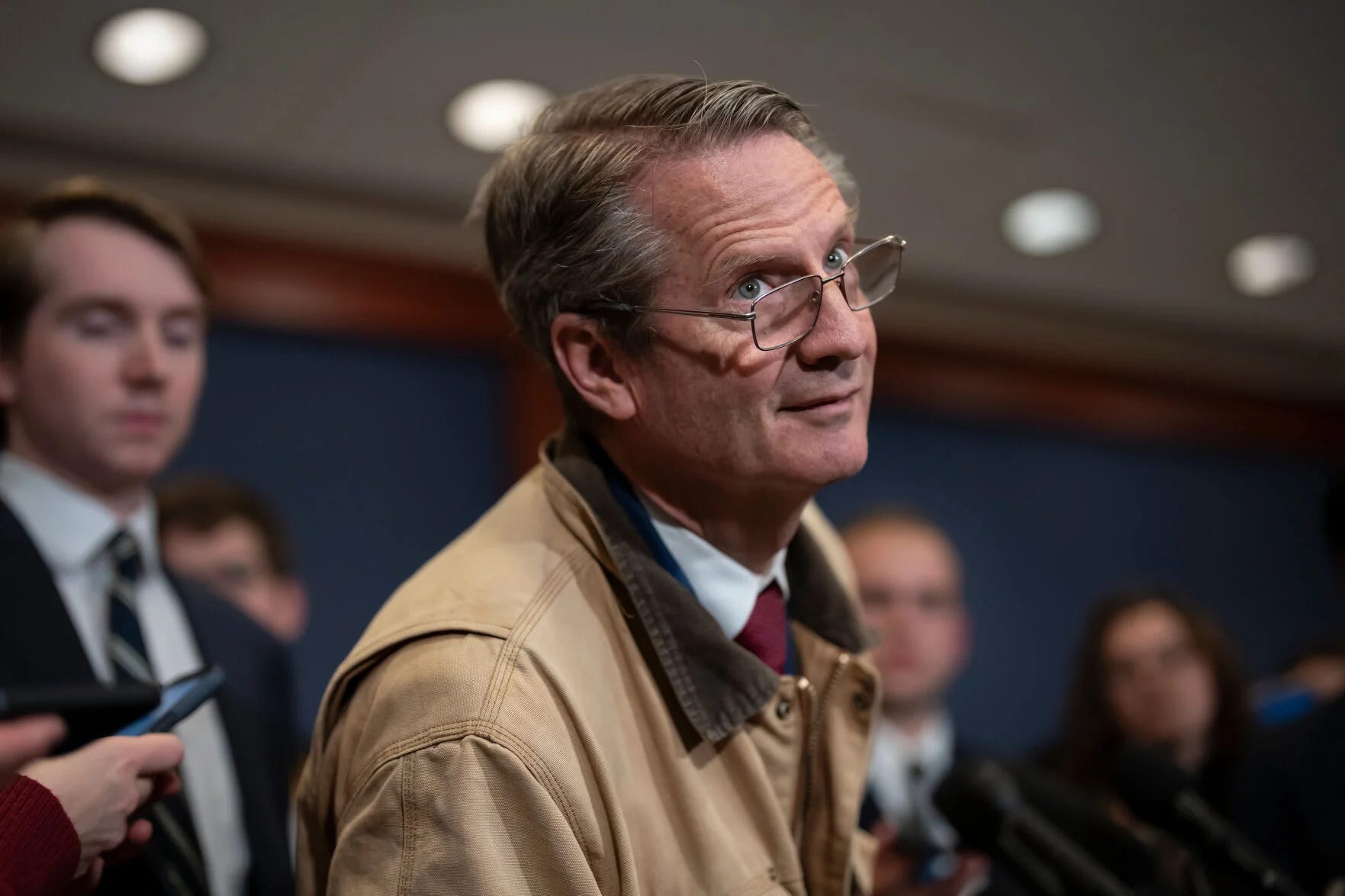
“It’s less formal, and I think it puts people at ease. [Hearings are] great for click bait. If everybody’s screaming at each other, we don’t get anything done,” Rep. Tim Burchett (R-Tenn.), who chairs the Subcommittee on Delivering on Government Efficiency, which held a roundtable on Wednesday about eliminating duplicative federal programs. “I’ve been here eight years. I’d like to do something.”
Burchett also suggested the loss of procedural power is minimal at the subcommittee level.
“Rep. Jasmine [Crockett (D-Texas)] walked in, I made sure she was immediately recognized,” he said. “I didn’t have any ulterior motives. I just want everybody to feel at ease.“
Still, Oversight Democrats say it removes the few tools the minority has to force accountability.
“I think the Republicans have realized that if they have hearings, then it opens up an opportunity for there to be votes at those hearings,” Congressional Progressive Caucus Chair and committee member Greg Casar (D-Texas) said. “And they’re worried about a few Republicans joining us on those votes.”
The Oversight Subcommittee on Health Care and Financial Services held a roundtable this afternoon on “mental health in the MAHA age.”
Rep. Lateefah Simon (D-Calif.), who serves on the subcommittee but did not attend the session, said the Republican majority should use formal oversight tools such as public hearings and sworn testimony.
“We use our tools because we don’t have the gavel to provide information to the public and to give folks a voice, particularly our Epstein hearings,” she said. I don’t know what they’re doing. It’s not oversight.”
Unlike formal hearings or markups, which are governed by committee rules and give members the ability to call and question witnesses, introduce motions, and force recorded votes, informal roundtables carry no binding procedural authority. Typically used to complement official proceedings, they do not allow the minority to issue subpoenas or other compulsory measures—effectively concentrating control in the majority and reducing opportunities for members to challenge leadership in a formal setting, according to current and former congressional staff and procedural experts.
A source familiar with Committee Democrats said that when Republicans rely on roundtables instead of formal hearings, it limits the minority’s role in the process.
“That makes it harder for Oversight Democrats to do our job of holding people accountable and getting things done,” the source said.
Spokespeople for Oversight Committee Chair James Comer (R-Ky.) did not respond to a request for comment.
The dynamic extends beyond the minority party, curbing opportunities for rank-and-file Republicans to challenge leadership or take independent positions through formal committee action. But Committee Democrats argue it has occurred only because their GOP colleagues have stepped back from the responsibility to conduct rigorous oversight.
“If they are really courageous about their areas of disagreement, they can join us in the full committee, and I encourage them,” Rep. Summer Lee (D-Pa.), who made the motion that forced the release of Epstein files. “And I challenge them to do so.”
Rep. Shontel Brown (D-Ohio) took a similar position.
“Under this Trump administration, my Republican colleagues have just given up their power,” she said. “They have not exercised their authority of checks and balances. And I feel like if they don’t want to do the job, then they shouldn’t have the job.”
House Minority Leader Hakeem Jeffries (D-N.Y.) attributed Oversight Democrats’ success to the caucus taking a forceful, aggressive and values-driven approach in pushing back against what he described as MAGA extremism.
“These so-called Republican roundtables are complete and total fraud. Republicans can run, but they cannot hide,” he said. “And we’re going to keep the pressure on them until we can end this national nightmare of Republican extremism and get the situation turned around in the United States.”
IN THE KNOW
— Sens. Elissa Slotkin (D-Mich.), Todd Young (R-Ind.), Adam Schiff (D-Calif.) and John Curtis (R-Utah) introduced bipartisan legislation to ban federal officials from using nonpublic information to bet on prediction markets, amid growing scrutiny of prediction market activity during recent national security developments, including the Iran strikes. The Public Integrity in Financial Markets Act of 2026 would apply to members of Congress, executive branch officials and federal employees. It would prohibit trading in event contracts using insider knowledge obtained through official duties. Violators would face financial penalties tied to their profits. The bill would also require timely disclosure of certain trades and direct federal ethics offices to enforce the rules.
— Sens. Elizabeth Warren (D-Mass.) and Josh Hawley (R-Mo.) unveiled bipartisan legislation to restrict stock buybacks and executive pay for major defense contractors. The bill would codify an executive order from President Donald Trump aimed at pushing firms to prioritize military readiness over shareholder returns. It would bar buybacks, dividends and executive pay above $5 million unless the Pentagon certifies a company is meeting performance needs. It would also give the Defense Department new authority to penalize or cut off underperforming contractors. The push follows persistent cost overruns and delays in weapons programs, even as top firms have sent more than $100 billion to investors since 2020.
— Reps. Gregory Meeks (D-N.Y.) and Pramila Jayapal (D-Wash.) are out with a bill to block President Trump from using federal funds for military action against Cuba without congressional approval. The Prevent an Unconstitutional War in Cuba Act would bar funding for any U.S. military force in or against Cuba absent authorization from Congress, except in cases of self-defense or an imminent threat. The measure reflects mounting concern among Democrats over Trump’s escalating posture toward Cuba, including an economic blockade and rhetoric suggesting potential military action. It also underscores a broader effort on Capitol Hill to reassert Congress’s war powers after recent conflicts in Iran and Venezuela raised questions about executive authority.

READ ALL ABOUT IT
”Why ICE is allowed to impersonate law enforcement” by Vittoria Elliott: “‘There’s no accountability,’ one expert tells WIRED of ICE’s ability to lie to the public. ‘The consequence of this is that it’s going to be a systemic harm across all law enforcement.’”
“Why AI companies want to take control of your computer” by John Herrman: “Claude would like a little help learning how to do your job.”
”The world’s deadliest infectious disease is on the rise in the US” by Shayna Korol: “We discovered its cause 144 years ago. It’s still a massive problem.”