


TODAY IN CONGRESS
👋🏾 Hi, hey, hello! Good Wednesday morning. Thanks for waking up to Congress Nerd Sunrise. Get in touch: michael@onceuponahill.com.
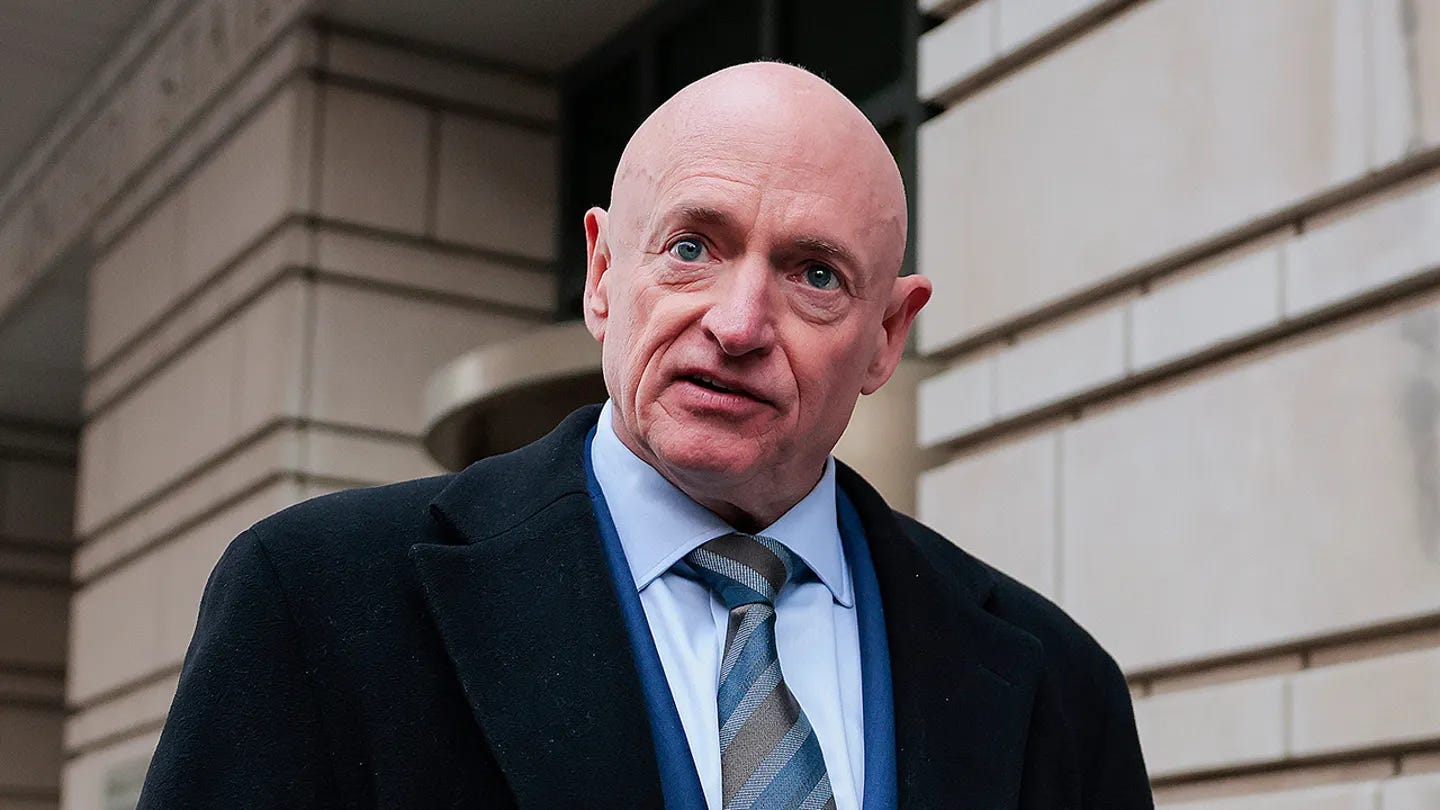
Sen. Mark Kelly (D-Ariz.) will spotlight the economic and national security stakes of artificial intelligence on Capitol Hill’s policy agenda this morning during a discussion at Brookings Institution, as lawmakers grapple with how to regulate the rapidly advancing technology without undercutting U.S. competitiveness.
Kelly is scheduled to speak at 10 a.m. at a Brookings event titled “AI, workers, and national security in a changing world,” where the former astronaut and Navy combat pilot is expected to outline his view that Washington must move quickly (and carefully) to manage the economic disruption and geopolitical implications of the AI boom.
The Arizona Democrat rolled out an “AI for America” roadmap last fall that calls for strengthening worker protections, expanding the infrastructure needed to power AI development and ensuring the United States maintains an edge over global rivals in deploying the technology.
The conversation comes as policymakers confront a series of unsettled questions about how AI will reshape the labor market and the broader economy. Early research suggests the technology could deliver major productivity gains over time, but its effects are expected to vary widely across industries and skill levels, raising concerns about potential job displacement in certain sectors even as new opportunities emerge elsewhere.
Another flashpoint is the enormous infrastructure footprint required to support the AI industry. Data centers that power advanced AI models require vast amounts of electricity, specialized equipment and skilled labor, creating pressure on local energy grids and construction pipelines. Some communities have already raised concerns about rising power costs tied to data center growth, prompting several states to consider legislation that could slow or limit new facilities.
Those domestic policy debates are unfolding alongside intensifying geopolitical competition over AI capabilities. U.S. defense officials increasingly view the technology as a critical component of future military systems and intelligence operations, making its development a strategic priority in the rivalry with China and other powers.
Kelly, who sits on the Senate Armed Services Committee and previously flew combat missions during his Navy career, has framed the challenge as a balancing act: encouraging innovation that keeps the United States ahead technologically while putting guardrails in place to protect workers, infrastructure and national security.
After Kelly’s remarks, Brookings experts and national security analysts will convene a panel discussion examining how policymakers might navigate that tension—an issue likely to remain high on Congress’s agenda as lawmakers weigh new proposals governing AI development, workforce impacts and the infrastructure needed to sustain the industry’s rapid growth heading into the November midterms and 2028 presidential election.
HAPPENINGS
All times Eastern.
The House is out.
The Senate is in at 10 a.m. and will resume consideration of the Housing for the 21st Century Act. Roll call votes are expected during today’s session.
The Senate Small Business Committee will hold a hearing at 2:30 p.m. on growing the small business pet economy.
The Senate Finance Subcommittee on Fiscal Responsibility and Economic Growth will hold a hearing at 3 p.m. to examine the fiscal outlook for the next decade.
The Senate Aging Committee will hold a hearing at 3:30 p.m. on China and America’s drug supply.
Sen. Mazie Hirono (D-Hawaii) will hold a press conference marking one year since the mass firings at the Education Department.
President Donald Trump will participate in executive time at 8 a.m. before traveling to Hebron, Ky., to participate in a site visit at Thermo Fisher Scientific in Cincinnati, Ohio, followed by a local TV interview at 3.05 p.m., a podcast interview at 4 p.m. in Hebron, and remarks at 4:25 p.m. He will return to Washington after these events.

IN THE KNOW
— Sen. Angela Alsobrooks (D-Md.) introduced the Professional Degree Access Restoration Act, legislation that would restore federal graduate and professional student loan limits reduced under President Trump’s One Big Beautiful Bill Act by amending the Higher Education Act of 1965. The bill—backed by several Senate Democrats and introduced in the House by Rep. Ritchie Torres (D-N.Y.)—aims to expand access to advanced degrees in high-demand fields such as nursing, teaching and social work by reinstating federal lending options for graduate and professional students.
— House Financial Services Committee Ranking Member Maxine Waters (D-Calif.) marked the three-year anniversary of the collapse of Silicon Valley Bank by reintroducing a package of bills aimed at tightening oversight of large financial institutions and holding bank executives accountable for failures. The legislation would expand regulators’ authority to claw back executive compensation, close gaps in enhanced prudential standards under the Dodd‑Frank Wall Street Reform and Consumer Protection Act and strengthen safeguards intended to protect depositors and the broader banking system.
— House Energy and Commerce Committee Democrats pressed the National Telecommunications and Information Administration to follow federal law and release Broadband Equity, Access and Deployment (BEAD) funding, warning the agency not to withhold grants from states with artificial-intelligence regulations. In a letter led by Ranking Member Frank Pallone (D-N.J.) and other panel Democrats, lawmakers argued that President Trump’s executive orders cannot override the broadband program authorized in the 2021 Bipartisan Infrastructure Law and cautioned that delaying funds could trigger years of legal challenges.
READ ALL ABOUT IT
“The Pete Hegseth exception” by Jeffrey Goldberg: “Nearly a year after a national-security scandal erupted on my iPhone, no one in the Trump administration has faced consequences.”
“Everyone is flocking to the same MAGA hot spot. They’re missing something critical.” by Ben Jacobs: “The ‘Rust Belt diner’ of the second Trump era is … a restaurant that serves bone marrow in the heart of D.C.”
“The laid-off scientists and lawyers training AI to steal their careers” by Josh Dzieza: “Experienced white-collar workers are now part of a miserable gig economy.”