


Today in Congress
With the Senate gone for the weekend and the House in recess until the week after next, the Capitol Hill press corps is finally catching its breath after a frenetic stretch.
This week alone brought the first American casualties in the war in Iran, President Donald Trump’s vow that the conflict could wrap up in a matter of weeks, classified briefings for lawmakers on the military operation and failed attempts in both chambers to force votes on ending hostilities.
And that’s before getting to the surprise move Thursday when Trump fired Homeland Security Secretary Kristi Noem and nominated Sen. Markwayne Mullin (R-Okla.) to replace her—the former MMA fighter known for bouncing a rubber ball through the Senate halls and somehow ending up in the middle of nearly every bipartisan negotiation since arriving in the chamber.
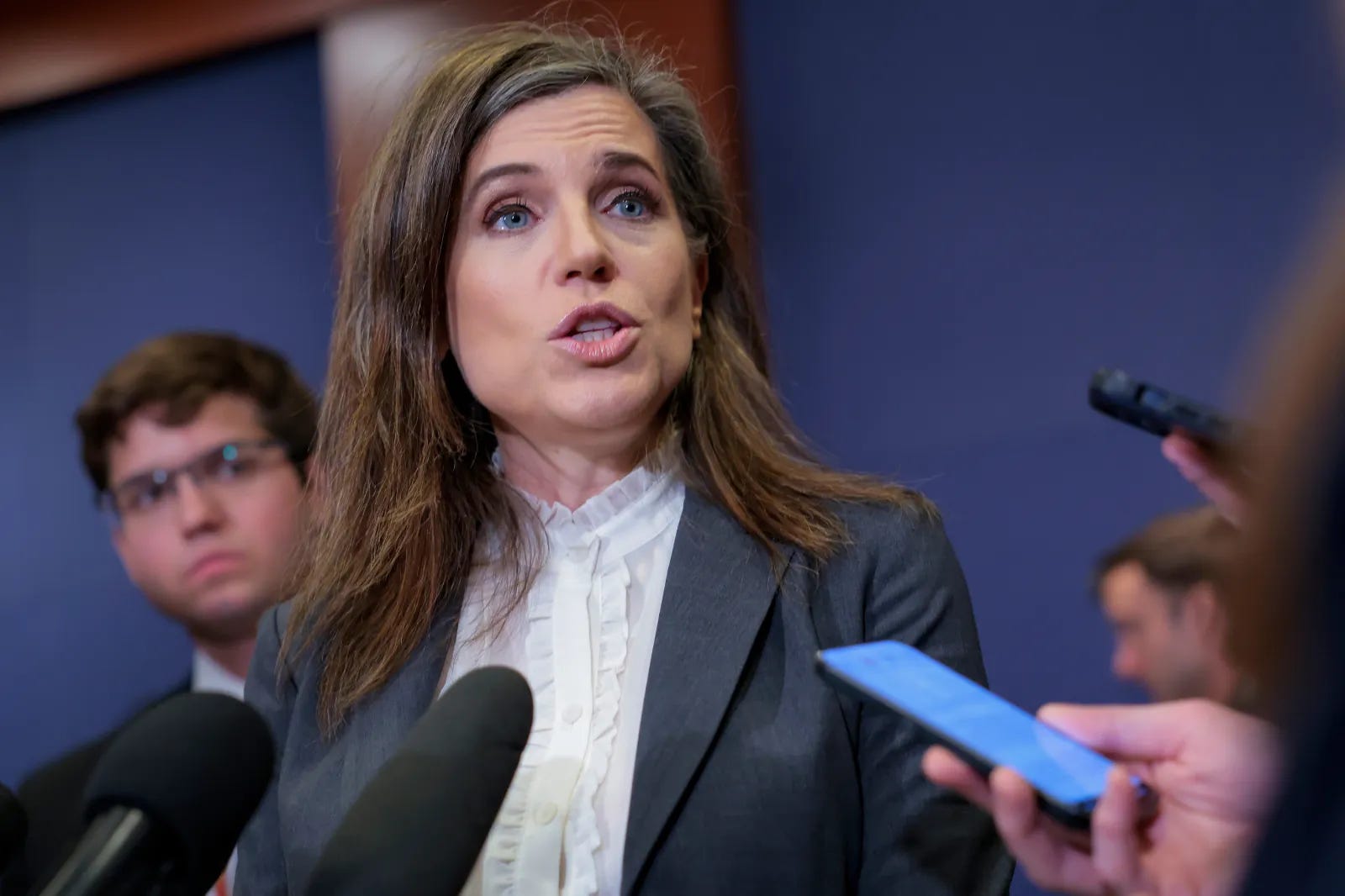
But there’s another story from this week that deserves a closer look (and one I’ve received numerous questions about): The House on Wednesday referred to the Ethics Committee a resolution sponsored by Rep. Nancy Mace (R-S.C.) that would require the panel to publicly release all records related to sexual harassment violations or alleged violations dating back to 1967, when the committee was first established. The vote was 357–65–1.
The majority of the 96-member Democratic Women’s Caucus voted to send the measure to Ethics despite supporting investigations into any lawmaker accused of sexual abuse or harassment and efforts to make the process more transparent. The concern centers on protecting survivors and preserving the integrity of the reporting process.
Even with personally identifiable information redacted, the small size of congressional offices could make it possible to identify survivors or witnesses, some of whom may still work on Capitol Hill. There is also a view that survivors whose experiences are detailed in the records should be consulted before any release, given warnings that forced disclosure could undermine the confidentiality that encourages victims and witnesses to come forward and could retraumatize those involved.
Behind the scenes, the caucus is in active communication with the resolution’s cosponsors to address those concerns and potentially refine the measure while preserving its core goal of greater transparency and accountability for sexual harassment and misconduct.
The effort is bipartisan. There is openness to working with Republicans to improve transparency in the Ethics Committee’s sexual misconduct processes while continuing efforts to strengthen protections for survivors and improve how the House handles such cases.
At the same time, there is support for the Ethics Committee’s decision to create an investigative subcommittee examining allegations involving Rep. Tony Gonzales (R-Texas), who acknowledged this week that he had an affair with a staffer who later died by self-immolation last year.
House Republican leaders on Thursday called on Gonzales to withdraw from his reelection campaign as the investigation proceeds.
Happenings
All times Eastern.
The House and Senate are out.
The House Appropriations Committee on Legislative Branch will hold a budget hearing at 9 a.m. on the Library of Congress and the U.S. Government Publishing Office.
President Trump will participate in executive time at 8 a.m., signing time at 1 p.m., a policy meeting at 1:30 p.m., meetings with Defense Secretary Pete Hegseth at 2:30 p.m. and Interior Secretary Doug Burgum at 3:30 p.m., and a college sports roundtable at 4 p.m. before traveling to Miami.

In the Know
— House Budget Committee Ranking Member Brendan Boyle (D-Pa.) asked the Congressional Budget Office to estimate the financial and economic cost of President Trump’s military operation in Iran. The request seeks an analysis of the war’s operational and logistical expenses, potential long-term costs, including diplomatic and foreign aid spending, the strategic opportunity costs for U.S. forces, and possible price effects from economic disruption.
— House Energy and Commerce Committee Ranking Member Frank Pallone (D-N.J.) and Senate Finance Committee Ranking Member Ron Wyden (D-Ore.) released a report arguing that the One Big Beautiful Bill Act’s more than $1 trillion from Medicaid and the Affordable Care Act is already leading to hospital and clinic closures, layoffs and higher costs for patients. The report cites 17 health facility closures or service reductions across nine states, more than 1,000 health care layoffs and roughly 1.2 million Americans dropping ACA coverage after Republicans refused to extend the law’s enhanced premium tax credits.
— Senate Minority Whip Dick Durbin (D-Ill.) introduced the Promoting Dental Health Act, legislation that would reauthorize funding for the Centers for Disease Control and Prevention’s Oral Health program for five years to support cavity prevention, dental education and school-based sealant programs for low-income children. The program currently receives about $20 million annually and funds oral health initiatives in 15 states, but Durbin said expanded funding is needed, as millions of Americans live in areas with dental provider shortages and tens of millions lack dental insurance.

Read All About It
“Buckle up for bumpier skies” by Burkhard Bilger: “With climate change, the skies are becoming more turbulent. Can today’s planes still keep us safe?”
“Thr McDonald’s CEO’s burger-eating mistake” by Ellen Cushing: “If you’re going to eat on the internet, you’d better do it a certain way.”
“WhatsApp, neighbor?” by Sara Lieberman: “Residents are using the app to thwart package thieves, negotiate rent reductions, and, yes, sometimes gripe about each other.”