


👋🏾 HI, HEY, HELLO! Welcome back to Congress Nerd Daily. I hope today was everything for you. The midterms are in 27 days.
FIRST THINGS FIRST
Today marks three years since Hamas-led militants attacked southern Israel, killing about 1,200 people and taking 251 hostages in the deadliest day in the country’s history. The attack set off a war that has reshaped the Middle East and devastated Gaza, where more than 74,000 Palestinians have been killed, according to the territory’s Health Ministry, and much of the population remains displaced. As families and communities mark the anniversary, I’m remembering the lives lost, the survivors still carrying the trauma of that day and the civilians who have endured the staggering human cost of the years since.
VIEW FROM THE HILL
Congressional Democrats are getting more specific about how they want Washington to govern artificial intelligence, with a pair of new proposals today adding to a growing body of ideas that could shape the debate in the next Congress.
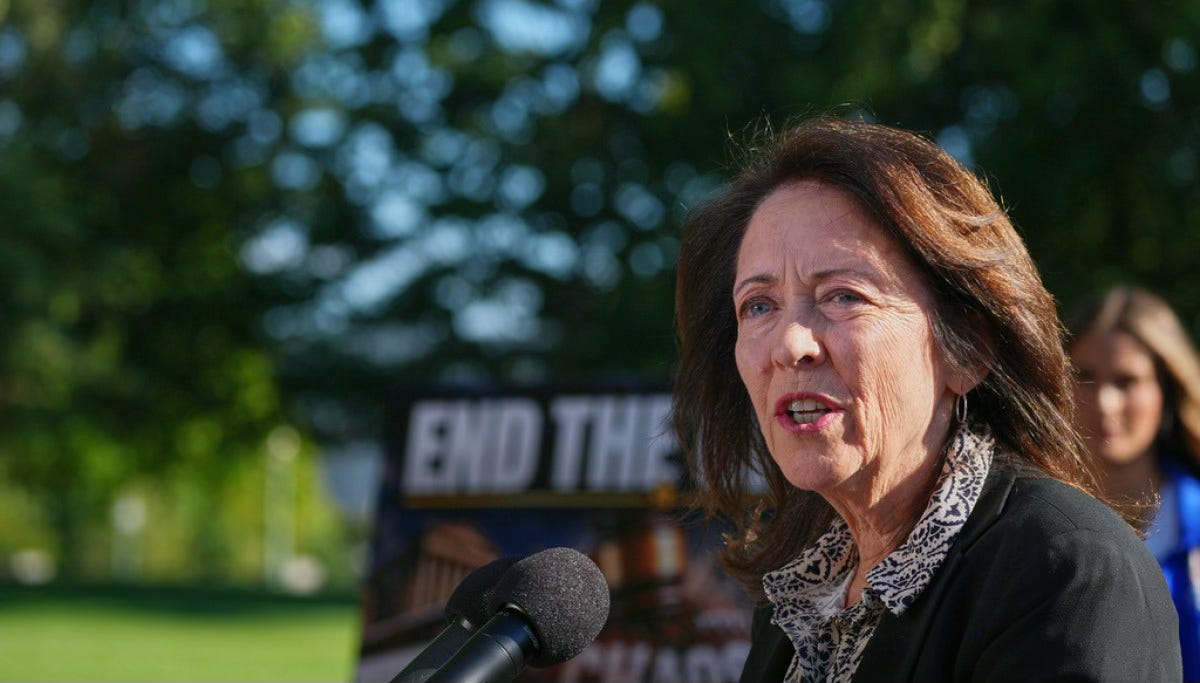
Sen. Maria Cantwell of Washington, the top Democrat on the Senate Commerce Committee, released a six-part framework calling for enforceable federal safety standards for the most advanced AI systems, continuous testing and independent audits, incident reporting and greater accountability for developers. Separately, Rep. Lori Trahan (D-Mass.) unveiled a discussion draft that would create a federal cause of action allowing people harmed by AI agents to hold developers liable in certain cases.
The proposals approach the technology from different directions but reflect what Nicholas Garcia, senior policy counsel at technology advocacy group Public Knowledge, described to me in an interview this afternoon as a meaningful shift in the congressional conversation.
“We are seeing that in the recent months, congressional Democrats are absolutely taking the questions of frontier AI safety and catastrophic risk much more seriously than was the case, let’s say, a year ago,” Garcia said, pointing to “increasing specificity and focus” on how the federal government could oversee those risks.
