


First Things First
👋🏾 Hi, hey, hello! Thank you for starting your day with Congress Nerd Sunrise.
Hours after Senate Commerce Committee Chair Ted Cruz (R-Texas) and Ranking Member Maria Cantwell (D-Wash.) on Wednesday morning unveiled the bipartisan Protect College Sports Act, lawmakers in both parties raised concerns that the framework either does too little to shield schools from mounting legal exposure or too much to restore NCAA control over athletes.
The early reaction to the legislation underscores the difficult political balancing act facing senators trying to stabilize college athletics without alienating either schools or athletes.
House Energy and Commerce Chair Brett Guthrie (R-Ky.) and House Education and Workforce Chair Tim Walberg (R-Mich.) warned the legislation leaves unresolved what many House Republicans increasingly view as the central question hanging over college sports: whether student-athletes will ultimately be treated as employees.
The Republican chairmen argued that without resolving employment status, schools could remain exposed to costly litigation and financial pressures that threaten smaller athletic departments, women’s sports and Olympic programs.
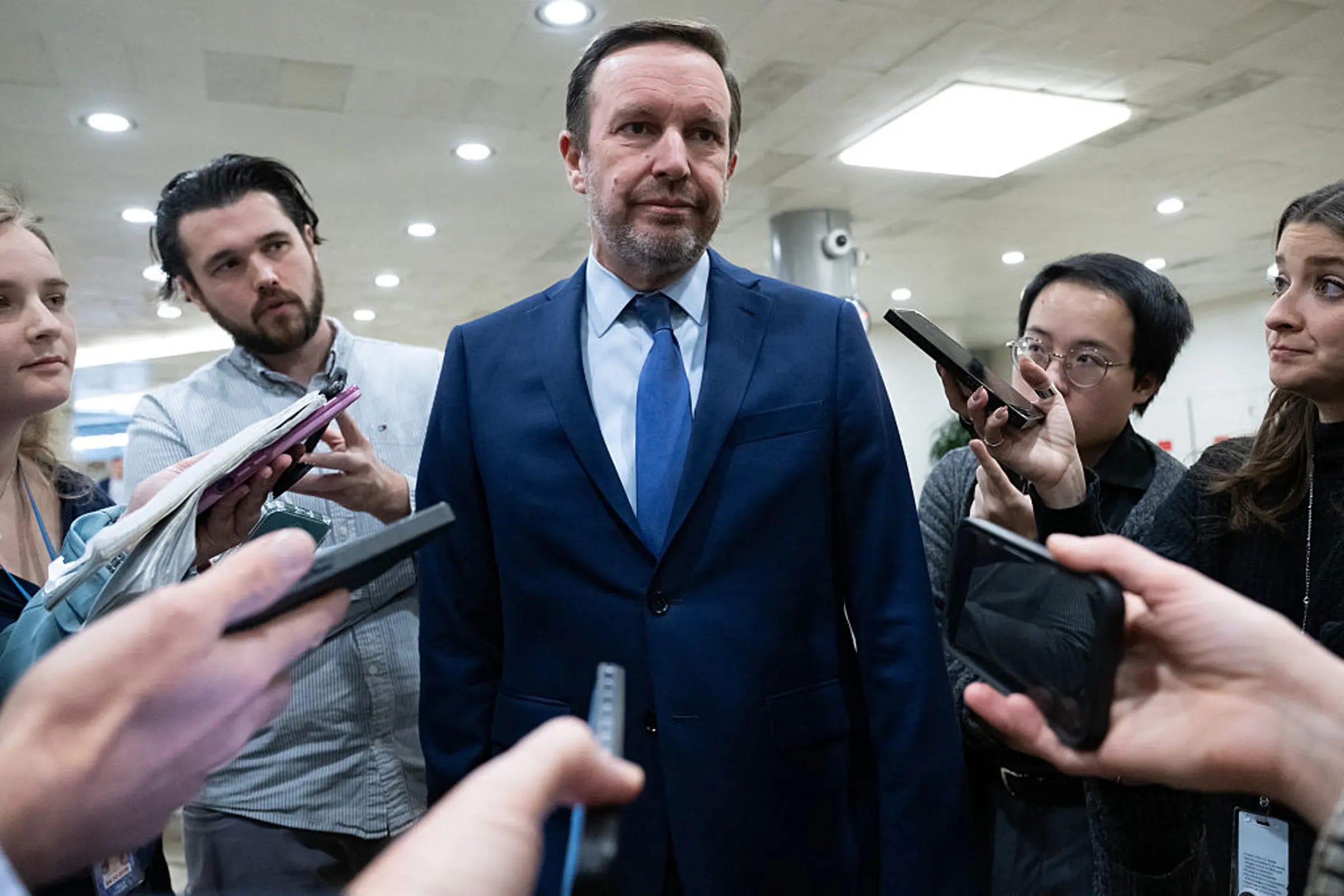
Sen. Chris Murphy (D-Conn.) criticized the proposal from the opposite direction, arguing the framework appears designed primarily to protect the NCAA and wealthy athletic departments rather than athletes themselves.
Murphy said the legislation would limit athlete compensation while granting the NCAA antitrust protections unavailable to most industries, even as coaches, athletic directors and conference executives continue collecting massive salaries.
Notably absent were immediate public responses from several House Democrats who helped derail the SCORE Act last week, including Rep. Lori Trahan (D-Mass.), Congressional Black Caucus Chair Yvette Clarke (D-N.Y.) and senior House Democratic leaders who had become increasingly vocal critics of the NCAA and major conferences during the House debate.
Conference leaders, meanwhile, cautiously welcomed the Senate effort while stopping short of fully endorsing the legislation.
SEC Commissioner Greg Sankey said the conference appreciated Cruz and Cantwell’s efforts to “seek solutions for college sports” but stressed the league would continue reviewing the bill before drawing conclusions about its merits.
Big Ten Commissioner Tony Petitti thanked the senators for working to restore “stability” to college athletics, while Big 12 Commissioner Brett Yormark praised the legislation’s attempt to “help build a sustainable future for college sports.” ACC Commissioner Jim Phillips similarly framed the proposal as part of a broader effort to preserve opportunities for future student-athletes.
The bipartisan legislation would create a national NIL standard overriding state laws, preserve the House settlement’s roughly $20.5 million annual revenue-sharing framework and give the NCAA and conferences limited antitrust protections to enforce recruiting, transfer and compensation rules.
The bill would also crack down on booster-backed “sham NIL deals,” limit athletes to one unrestricted transfer before future moves could trigger sit-out penalties and prohibit professional athletes from returning to college competition after signing pro contracts.
A Republican Senate Commerce aide described the proposal as an attempt to restore practical amateurism for the modern era by bringing order to a college sports landscape increasingly defined by NIL bidding wars, transfer portal chaos, conference consolidation and litigation.
But the mixed reaction suggested the legislation may face the same political squeeze that has doomed previous congressional attempts to regulate college athletics: Republicans worried the bill does not go far enough to protect schools from labor exposure and lawsuits, while Democrats and athlete advocates remain skeptical it gives too much power back to the NCAA and the richest conferences.
📬 Send me tips, scoops or just say hi: michael@onceuponahill.com.
What Paid Subscribers are Reading
In last evening’s Congress Nerd Sunset, I broke down the bipartisan Cruz-Cantwell proposal to regulate college athletics and how Senate negotiators are attempting to strike a delicate balance between athlete compensation and restoring order to the NIL and transfer portal chaos reshaping the sport—while confronting growing backlash from athletes, Democrats and civil-rights groups who fear the framework gives too much power back to the NCAA and the richest conferences. Still on the free plan? Upgrade your subscription for full access to this report and all future editions of Sunset.
Happenings
The House is out.
The Senate will meet at 3:30 p.m. for a pro forma session.
President Trump will participate in a pre-tape interview at 10 a.m., signing time at 2 p.m. and a policy meeting at 3:30 p.m.
Treasury Secretary Scott Bessent will hold a White House press briefing at 2 p.m.
In the Know
— Rep. Mark Takano (D-Calif.) and Rep. Ritchie Torres (D-N.Y.) publicly rebuked former Rep. Colin Allred on Wednesday after his runoff victory over Rep. Julie Johnson (D-Texas), exposing fresh tensions inside the Democratic coalition over representation following the Texas primary runoffs the night before.
In a statement issued by the Congressional Equality Caucus’s political arm, Takano and Torres praised Johnson’s campaign while warning her defeat could leave Texas—and potentially the broader South—without openly LGBTQ+ representation in Congress.
“Many in our community remain deeply hurt by Colin Allred’s decision to challenge one of our own,” they said. “As he moves forward, he bears a responsibility to help heal those divisions and rebuild trust with the communities impacted by this race.”
The statement marked one of the sharpest public responses from Democratic lawmakers following Tuesday’s runoff elections and underscored the difficult tradeoffs national Democrats navigated throughout the Texas cycle between identity-based representation and perceived general-election strength.
Allred defeated Johnson in a closely watched North Texas runoff that became a proxy battle over the party’s future, generational leadership and coalition politics. National Democrats viewed Allred as one of the party’s strongest statewide communicators after his 2024 Senate campaign against Sen. Cruz, while Johnson’s allies argued Democrats should not push aside one of the South’s few openly LGBTQ+ members of Congress in pursuit of electoral pragmatism.
Equality PAC stopped short of opposing Allred going forward, but the group’s unusually candid statement suggested some frustration inside LGBTQ+ Democratic circles may outlast the runoff itself.
— Republicans and Democrats in the bipartisan Problem Solvers Caucus launched a new working group aimed at curbing partisan gerrymandering, injecting a small but notable cross-aisle collaborative effort into the year-long redistricting wars that exploded after President Trump pushed Texas Republicans last summer to aggressively redraw the state’s congressional map ahead of the midterms.
The new task force, announced by Problem Solvers Caucus co-chairs Rep. Brian Fitzpatrick (R-Pa.) and Rep. a (D-N.Y.), will explore reforms to what members described as a system in which “politicians often choose their voters instead of voters choosing their representatives.” The working group comes as both parties remain locked in escalating legal and political battles over congressional maps following the Supreme Court’s controversial decision in Louisiana v. Callais, which, as you know by now, narrowed the practical reach of Section 2 of the Voting Rights Act and accelerated partisan remapping fights across the South.
The bipartisan panel will be co-chaired by Reps. Jeff Hurd (R-Colo.), Ed Case (D-Hawaii), Nick LaLota (R-N.Y.) and Debbie Dingell (D-Mich.) and includes a politically diverse mix of battleground-district lawmakers from both parties.
The effort is unlikely to produce immediate legislative breakthroughs in a divided Congress, particularly because the Constitution gives states broad authority over redistricting. But the announcement underscores how the fallout from the Texas wars has reverberated far beyond Austin. Trump’s pressure campaign on Texas Republicans last year triggered a broader national arms race over House maps, with Democrats openly debating whether to pursue more aggressive counter-gerrymanders in blue states while voting-rights groups challenged GOP-drawn maps in federal court.
Members involved in the effort argued that increasingly safe districts have fueled polarization and weakened incentives for compromise, a dynamic that has become more pronounced as competitive House seats continue to disappear nationwide. The working group’s creation also reflects growing anxiety among some centrist lawmakers that perpetual map warfare could further erode public trust in democratic institutions at a moment when election legitimacy and voting rights remain central political flashpoints heading into November.