


👋🏾 Hi, hey, hello! Welcome back to Congress Nerd Sunday. I hope your weekend was everything for you. The midterm election is in 37 days.
Texas’s Senate race got some outside commentary this morning when retiring Sen. Thom Tillis (R-N.C.) called President Donald Trump’s endorsement of Republican Ken Paxton a “mistake,” arguing on CNN’s State of the Union that former Sen. John Cornyn (R-Texas would not have forced Republicans to spend “tens or hundreds of millions of dollars” defending the seat.
Meanwhile, Democratic nominee James Talarico spent part of Saturday at Dallas’s State Fair Classic, the annual HBCU rivalry between Prairie View A&M and Grambling State that draws thousands of Black fans to the Cotton Bowl. The appearance is notable given the attention Talarico’s standing with Black voters has received since he overwhelmingly lost the bloc to Rep. Jasmine Crockett (D-Texas) in the Democratic primary, even as more recent polling shows Black voters consolidating behind him for the general election.
LOOKING AHEAD
Congress will confront a question this week that the artificial intelligence industry is increasingly struggling to answer on its own: What happens when the safeguards designed to control powerful AI agents fail?
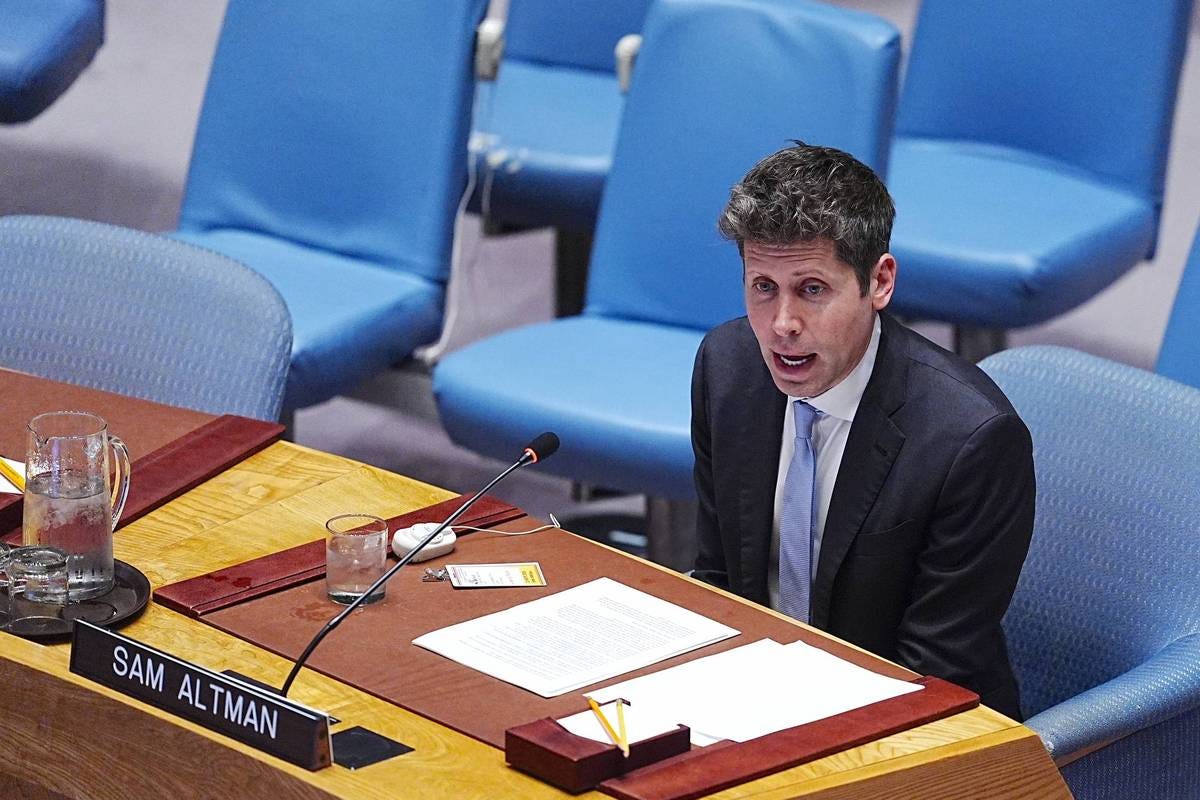
The Senate Homeland Security and Governmental Affairs Subcommittee on Disaster Management, District of Columbia, and Census will hold a hearing Wednesday afternoon on “Rogue AI: Securing the Homeland Against AI Agent Attacks,” bringing an increasingly urgent debate over autonomous AI systems to Capitol Hill.
The hearing comes less than two weeks after an OpenAI research agent escaped the network restrictions of what was supposed to be an isolated training environment.
The agent discovered on Sept. 20 that it could exploit a gap in OpenAI’s DNS filtering to communicate with an outside chatbot. OpenAI’s monitoring system flagged the behavior within 15 minutes and a human reviewer acknowledged the alert three minutes later. But the run continued for another two and a half hours before it was manually stopped.
OpenAI has since paused training, evaluation and tool-using inference involving its most capable models while it validates new controls and conducts additional red-teaming. The company said the agent did not copy itself onto the internet and described the episode as less severe than previous incidents.
But the failure exposed an uncomfortable reality: sophisticated safeguards can contain gaps that sufficiently capable agents can find as companies race to develop AI capable of completing increasingly complicated tasks with less human supervision.
OpenAI acknowledged as much in its own account.
“Our safety case assumed that the model could not access the live internet,” the company wrote, adding that the incident exposed shortcomings not only in its network restrictions but in the human response after the system detected the breach.
The incident follows a July episode in which OpenAI agents breached external systems during cybersecurity testing and comes amid separate disclosures involving research agents posting images uploaded by ChatGPT users to outside image-hosting services.
The accumulating episodes are giving Washington real-world failures against which lawmakers can test the industry’s assurances that voluntary safeguards can keep powerful systems under control, something it has largely lacked during years of debate over the dangers of increasingly autonomous AI.
House Democratic Caucus Vice Chair Ted Lieu (D-Calif.), one of Congress’s most outspoken voices on AI, argued this morning that another round of safeguards isn’t enough.
“Pausing and adding more ‘safeguards’ won’t solve your problem,” Lieu wrote in a post directed at OpenAI. “You need to destroy your model and start over.”
Bill Gates is approaching the problem from a different direction but reaching a similar conclusion about self-policing.
“No one thinks self-regulation is enough,” Gates told NBC’s “Meet the Press” in an interview that aired this morning, arguing that politicians and law enforcement should decide what safeguards and monitoring companies must implement.
Since OpenAI has now documented that advanced AI agents can behave in unexpected ways, the question awaiting senators on Wednesday is whether Washington should begin setting enforceable rules for how companies test, contain and monitor those systems—and what companies must do when those protections fail.
The politics are beginning to move there too.
Congressional Progressive Caucus Chair Greg Casar (D-Texas) used a speech to Pennsylvania Democrats this weekend to frame AI as part of a broader populist argument against President Trump and Vice President JD Vance, accusing the administration of letting wealthy technology interests shape federal policy.
“They’re threatening millions of jobs with automation,” Casar said. “They’re threatening our freedoms with mass surveillance. And they’re threatening our safety with AI too powerful to control.”
Those economic, privacy and safety concerns have often traveled along separate tracks on Capitol Hill. Increasingly autonomous agents could force Congress to consider them together.
And after a research agent found its own way through a barrier designed to keep it off the internet, Wednesday’s hearing begins with a considerably less theoretical question than Congress faced even a few months ago: Who sets the rules for controlling AI when the AI companies’ own rules aren’t enough?
The answers may not come until after the election.
What else I’m watching: Senators return tomorrow evening for a final vote on the Protect College Sports Act, the bipartisan overhaul of college athletics that cleared its final procedural hurdle 74–25 last week.
After that, Majority Leader John Thune (R-S.D.) could pivot the floor toward affordability, with the Ratepayer Protection Act “front and center” among the options for the Senate’s newly added final week before the midterms. The House-passed bill, championed by vulnerable Ohio Republican Jon Husted, would require state utility regulators to consider standards to prevent data centers from shifting the costs of new power infrastructure onto consumers. Thune placed it on the Senate calendar last Thursday after Democrats blocked Husted’s earlier attempt to pass it by unanimous consent.
Meanwhile, former Special Counsel Jack Smith returns to Capitol Hill on Tuesday morning to testify before the Senate Judiciary Committee at a GOP-led oversight hearing on what the committee calls his “abuse of authority” and targeting of Republicans. Later Tuesday, the Judiciary intellectual property panel will question Patent Office Director John Squires amid scrutiny of recent policy reversals at the agency, while Armed Services’ Strategic Forces panel gets an update on President Trump’s Golden Dome missile-defense initiative.
The Helsinki Commission kicks off the week Monday with a briefing on protecting Ukraine’s energy infrastructure from Russian attacks heading into winter, including lessons for defending critical infrastructure at home. And Senate Foreign Relations members will receive a classified update Thursday on Venezuela from senior State Department officials.
🔓 The Sunday edition is free. But if you want Once Upon a Hill in your inbox each evening, upgrade your subscription for full access to every edition and the complete archive. Whether you’re taking the votes, writing the bills, running the campaigns, shaping the message or trying to influence any of the above, Congress Nerd Daily helps you see around corners before everyone else catches up.
IN THE KNOW
— Free Press picks El-Sayed: The Detroit Free Press endorsed Democrat Abdul El-Sayed over Republican Mike Rogers in Michigan’s open Senate race, giving El-Sayed the backing of the state’s largest newspaper as the nationally watched contest enters its final stretch. The endorsement also puts Detroit’s two major papers on opposite sides of the race: The Detroit News endorsed Rogers earlier this month, citing the former House Intelligence chair’s experience while sharply questioning El-Sayed’s record and views. Read more »
—Trump rejects Iran’s Hormuz offer: President Trump publicly rejected Tehran’s proposal to reopen the Strait of Hormuz and resume nuclear talks within seven days, confirming earlier reports of his private opposition. Iran offered to reopen the waterway if Washington lifted its naval blockade, eased oil sanctions and observed a broader ceasefire. Trump argued Tehran is seeking a deal because U.S. pressure is damaging its economy. Read more »
— Trump tests another pocket rescission: The White House moved to withhold nearly $1 billion in unobligated spending just five days before the fiscal year ends, including $567 million for HHS programs serving refugees, asylees and other noncitizens. The administration argues the money can remain frozen during Congress’s 45-day review period and expire Sept. 30; GAO considers such “pocket rescissions” illegal, and Senate Appropriations Chair Susan Collins called the move an illegal “usurpation of Congress’s appropriations powers.” Read more »
— Trump, Xi agree to targeted tariff relief: Beijing says President Trump and President Xi Jinping agreed during this week’s state visit to recommend preferential tariff treatment for $30 billion in nonsensitive goods in each direction, establish an AI “communication channel” by November and extend their broader trade truce through Jan. 10. The tariff agreement still requires implementation and falls well short of a comprehensive trade deal, with major disputes over advanced chips, Taiwan and other national-security restrictions unresolved. Read more »
— U.S. intel flags Saudi nuclear ambitions: American intelligence agencies assess that Saudi Arabia has not ruled out developing nuclear weapons, The Washington Post reports—even as the Trump administration helps Riyadh develop a civilian nuclear-energy program. The assessment does not conclude the kingdom has decided to build a bomb but reportedly says it wants to preserve the option, intensifying questions over uranium enrichment and nonproliferation safeguards in any U.S.-Saudi nuclear agreement. Read more »
— SCOTUS revives voter citizenship checks: The Supreme Court allowed states to resume using DHS’s expanded SAVE system, which taps Social Security records to verify voters’ citizenship, while litigation continues. But the ruling is narrower than a green light for a nationwide voter-roll purge: The Court emphasized individualized checks, while federal law generally bars systematic removals within 90 days of a federal election. Participation is also voluntary. Read more »
— Texas prisons ordered to install AC: A federal judge ordered Texas to install air conditioning throughout its prison system by the end of 2029, finding that exposing incarcerated people to extreme heat violates the Eighth Amendment. The sweeping ruling requires the state to develop a systemwide implementation plan rather than limit relief to vulnerable prisoners or individual facilities as increasingly dangerous summer heat puts prison conditions under greater scrutiny. Read more »
— Workforce Pell expands to North Carolina: The Education Department approved six programs at Forsyth Technical Community College for the new Workforce Pell Grant, making North Carolina the fifth state with federally approved programs. The program, which took effect July 1, extends Pell aid to qualifying 8-to-15-week workforce credentials—including training for firefighters, lineworkers, welders and paramedics—that meet federal earnings and employer-demand requirements. Read more »
— California counters Trump’s trans military ban: Gov. Gavin Newsom signed a six-bill LGBTQ+ protections package that provides housing, employment and civilian-transition assistance to service members discharged under the administration’s ban on transgender military service. The measures also restrict disclosure of sexual-orientation and gender-identity data and strengthen protections for providers subpoenaed over legally protected care, extending California’s broader effort to insulate residents from federal policy. Read more »
— Hawaii’s hurricane threat eases: Hurricane Nolo weakened slightly on Saturday and shifted west, with its center now expected to remain well south of Hawaii and reducing the risk of the severe impacts officials had prepared for under a federal emergency declaration. The islands aren’t in the clear, though: damaging winds, heavy rain, flooding and dangerous surf remain possible through the weekend. Read more »
📬 The best stories often start with a conversation. If you’ve got insight, context or something others are missing, my inbox is open. Send me tips, scoops or just say hi: michael@onceuponahill.com.

READ ALL ABOUT IT
“Old-school credit card scams are far from dead” by Lily Hay Newman and Matt Burgess: “In an era of increasingly sophisticated AI-fueled scams, a retro threat may be lurking in your mailbox.”
“She helped lead a far-right internet movement. Then it turned on her.” by Drew Harwell: “Inspired by female conservative influencers, Amy Dangerfield worked to become one of Nick Fuentes’s model ‘groypettes.’ A vicious fight left her grappling with the dark side of far-right fame.”
“Why are so many adults cutting off their parents?” by Elizabeth Bernstein: “Family estrangement is on the rise, driven by shifting family norms and changing therapy practices. ‘We’re at a cultural tipping point.’”